
Can you package an AI method you use every day as a Skill and sell it to customers abroad? If you make an Agent instead, where should you sell it, and how should you charge?
While considering digital products for my own site, I examined live product pages and platform information. There are sellers pricing Skill files. The stronger evidence of paid demand, though, concerns specific jobs such as video production, workflow automation, software integration, and customer support.
The order matters: find out who would pay for which result, then decide whether a Skill, Agent, service, or web tool is the right delivery method. The products, prices, and primary sources below were checked on September 14, 2026. They are useful for comparing product forms and identifying questions to test, rather than predicting your sales.
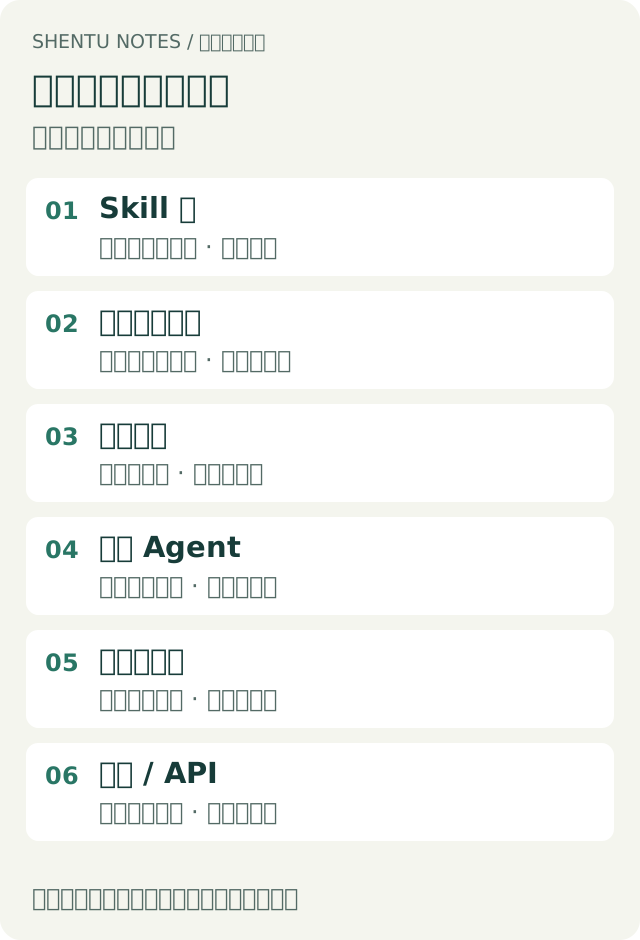
Six ways to sell one AI capability
Consider turning one video into content for several platforms. One buyer wants a method they can reuse. Another wants to upload a video and receive finished assets. A third wants the task wired into the team's weekly workflow. They need different levels of help, so they need different products.
Here, a Skill is a set of task instructions for an AI tool, perhaps bundled with examples, scripts, and references. The customer receives files and runs them in a compatible tool. An Agent is software that can use tools to pursue a goal—for example, read a customer's question, query an order system, and prepare a response.
On a narrow phone screen, scroll the tables horizontally if needed.
| Product form | What the customer receives | Possible pricing | What the seller takes on |
|---|---|---|---|
| Skill pack | Files, setup instructions, and examples to run themselves | One-time purchase; optional updates or support | Compatibility and reliable outputs |
| Automation workflow | An importable workflow and configuration guide | One-time purchase or setup fee | Changes to accounts, APIs, and tool versions |
| Done-for-you service | Finished videos, graphics, writing, or other output | Per job, package, or monthly retainer | Production, communication, and revisions on every order |
| Custom Agent | A task-specific program connected to company data and tools | Build fee plus maintenance | Testing, permissions, and long-term upkeep |
| Small online tool | A web interface that turns uploaded material into a result | Subscription or usage credits | Development, model costs, and support |
| Callable program or API | A processing, extraction, or analysis result | Per call or result | Reliability and operating costs |
An API lets other software call a capability without someone opening its website each time.
My judgment is that a Skill can be quick to make in a first version. A product that gives customers a result without configuration can also be easier to value—but it leaves more setup and maintenance with the seller. Include the support work you are willing to do when choosing a format.
Three Skill products with live listings
Product forms are abstract. These three listings show exactly what sellers promise to deliver.
| Product listing | Listed price | Packaging | Useful detail |
|---|---|---|---|
| Content Creator's Claude Skill Stack | $27 launch price | 18 Skills, setup instructions, installation video, and support | Setup difficulty is part of the offer |
| Claude Skills for Copywriters | $19 | 12 Skills, a usage guide, and input/output examples | Tasks are specific to copywriters |
| Claude Skills Pack | $39 | 30 files and a quick-start guide | An example of selling a file collection |
The first pack groups article, email, and video-script tasks for content creators. Its installation video and support acknowledge that what to do after downloading is part of the product.
The second lists landing-page critiques, email sequences, and brand-voice extraction, alongside input and output examples. Buyers can judge whether those jobs resemble their own before deciding to buy.
The third listing displayed five ratings when checked. That is a limited signal of feedback; it is insufficient to calculate sales or revenue. This comparison uses product pages, not purchases or hands-on tests. Compatibility and performance would need separate testing.
I would borrow the second approach: define the audience and job and show the result. File count and prompt length alone are weak long-term advantages. Buyers can more readily understand the work a pack helps them finish.
Where is there stronger evidence of paid demand?
Prices are one observation. We also need to ask whether people repeatedly pay for this kind of work. Two reports provide different measures.
Upwork: growth in revenue from completed projects
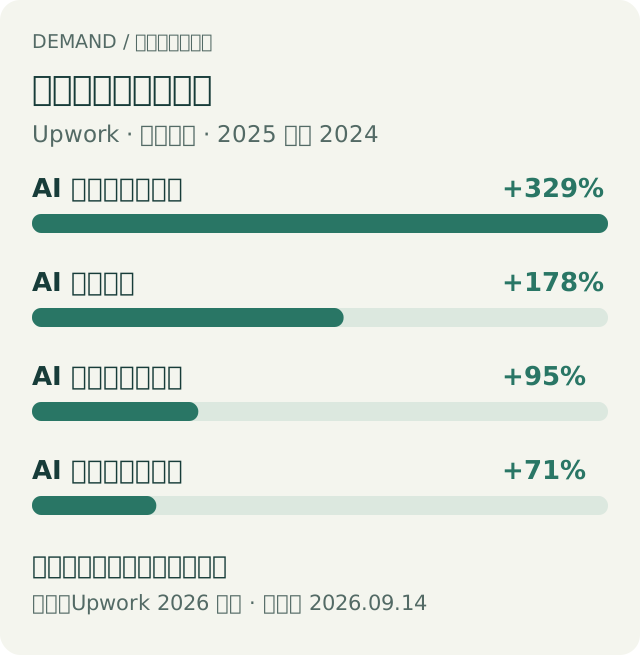
An Upwork 2026 report measured freelancer revenue from completed 2025 projects for US client demand, compared with 2024. It reported these year-over-year increases for AI-related skills:
| Area | Revenue growth | Example job |
|---|---|---|
| AI video generation and editing | 329% | Product clips, ad assets, post-production |
| AI integration | 178% | Connecting AI to a company's existing tools and processes |
| AI image generation and editing | 95% | Product and marketing imagery |
| AI chatbot development | 71% | Support, knowledge-base Q&A, customer inquiries |
Completed-project revenue is closer to payment than views or saves. These are growth rates, not a ranking by total market size. A newly listed Skill pack still needs its own demand test.
Fiverr: changes in buyer searches
Fiverr's 2026 Business Trends Index compared global search periods: May–October 2025 and November 2025–April 2026.
| Search category | Search growth | Related work |
|---|---|---|
| n8n AI automation | 125% | Connecting tools into an automated workflow |
| Excel data cleaning | 210% | Fixing formats, duplicates, and messy records |
| AI UGC video ads | 265% | Advertising in an everyday-user demonstration or testimonial style |
n8n is a workflow-building tool. UGC originally means user-generated content; here it is a marketplace ad-service category. Production method and disclosure depend on a particular project.
Searches express interest, not completed orders. Taken together, these reports make me want to examine three recurring jobs first: producing content, reducing repetitive operations, and handling customer requests.
Content work might mean ad assets, editing, and adapting one video for several platforms. Operations might mean files, spreadsheets, and data moving between tools. Customer-request work might mean a bounded support, order-status, or appointment flow. An enjoyable product can attract first-time experimentation; continued payment needs a reason to use it repeatedly.
Choose a sales channel that fits the delivery
A file, a custom project, and a hosted tool call for different channels.
| Channel | Better suited to | Possible use |
|---|---|---|
| Upwork and Fiverr | Custom automation, Agent setup, done-for-you content | Observe requests and test paid small projects |
| Gumroad | Downloadable Skills, guides, and templates | Handle checkout and file delivery, while your content attracts readers |
| PromptBase | Prompts | Study how one capability is demonstrated and priced |
| Apify Store | Runnable automation, data tools, and Agents | Publish software and charge by events or results |
| Your own site | Demos, cases, and online tools | Build trust and serve search or social traffic |
| Etsy | Original digital design products | Investigate demand for finished items such as printable designs |
These are channel uses. Before opening a shop, check seller eligibility and payment availability for your location.
Gumroad: simple file delivery does not solve discovery
The Gumroad fees page checked September 14, 2026, listed 10% plus $0.50 per transaction for sales through a creator profile or direct link. Sales to new customers brought by Discover carried a 30% platform fee.
Those rates distinguish checkout and delivery from customer acquisition. Uploading a product does not ensure the right people see it. A personal site can show a case and a usable sample, then send interested readers to checkout. For customers abroad, English product explanations, instructions, and demos are worth preparing.
Etsy: check what it permits
Etsy is a place to study original digital designs such as printables. Its official policy explanation prohibits stand-alone prompt bundles. AI-assisted original designs must also follow the platform's disclosure rules. Study the finished design a buyer receives and the concrete problem it solves.
Apify and Fin: charging for work completed
Apify's documentation describes publishing automations or AI Agents as paid Actors—programs that run on its platform. A seller can define billable events, such as a completed task or generated result.
Fin's pricing page provides another model: a customer-support Agent charged per defined outcome, listed at $0.99 per outcome when checked. Plans can also have minimum commitments or seat charges, so the unit price alone is not total spending.
The useful observation is the billing unit: customers can pay for work completed. Define a completed result, a failure, and a handoff to a human before billing against outcomes. A price page gives no evidence of actual revenue.
Plan a first small paid pilot
If I were starting now, I would follow find a recurring problem → make a sample result → take a few paid pilot orders → standardize delivery → then build a Skill or small tool.
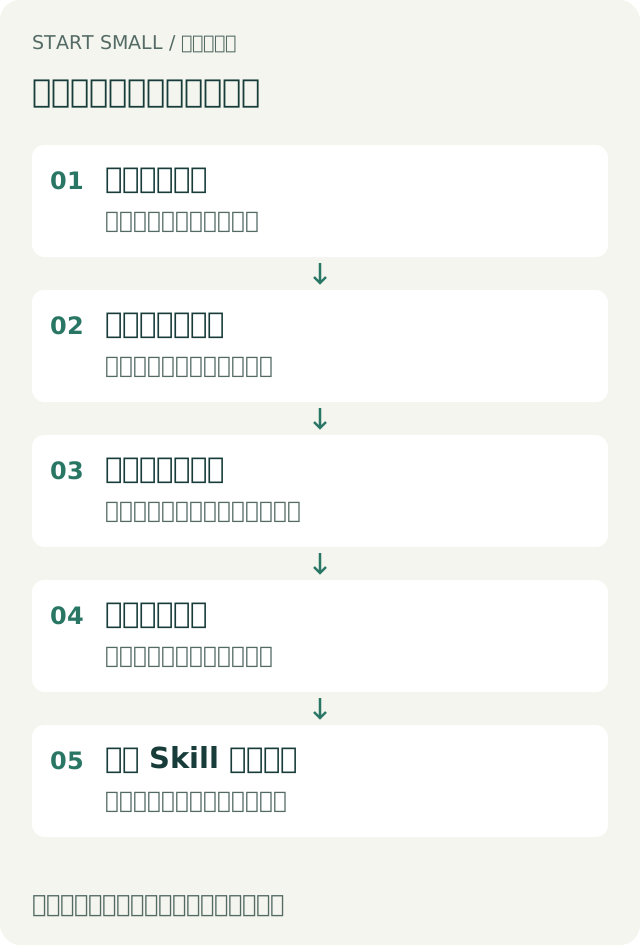
A small paid task reveals whether a customer values the outcome, saved time, installation, or support. If the job repeats and delivery stabilizes, package the reusable parts.
Three possible first samples can be tested without committing to one industry:
| Direction to test | First sample | What to observe |
|---|---|---|
| Content adaptation for creators | Turn one source asset into platform-ready content | Revision time and faithfulness to the source |
| Marketing assets for a small seller | Several images and short-video concepts for one product | Accuracy and whether the assets are ready to use |
| Information and document processing | Turn messy inputs into a checkable table or report | Accuracy, omissions, and human review time |
I would collect specific buyer comments and complaints first. “Installation is too hard,” “I still have to edit the result,” and “I need a different export format” reveal an unfinished step more clearly than attractive revenue claims.
Next, describe one chosen task briefly: what the customer provides, what you deliver, the turnaround time, included revisions, and cases priced separately. Show sample input and a finished result so a buyer can judge suitability before paying.
During pilots, record model calls, tool costs, manual revisions, support time, and cash costs separately. That evidence helps decide whether to sell a file, deliver work per job, or offer a monthly service.
I would defer a bundle of hundreds of Skills and a general-purpose Agent website. The first encourages counting files; the second brings development and maintenance work forward. The immediate goal is one bounded task someone is willing to pay for.
An existing independent site can hold an English demo, a real case, and a product description, with a link to checkout. Put up the first sample and show its input and result clearly. Then there is something concrete to discuss with potential buyers.
Sources and verification date
The pages below were checked September 14, 2026. Prices may change; consult the current platform page before buying or listing.
- Content Creator's Claude Skill Stack: listed deliverables and launch price.
- Claude Skills for Copywriters: tasks, examples, and price.
- Claude Skills Pack: file pack, price, and visible rating count.
- Upwork, In-Demand Skills 2026: completed-project freelancer revenue and year-over-year changes.
- Fiverr, Business Trends Index 2026: comparison periods and global search changes.
- Gumroad pricing: fees on direct and Discover sales.
- PromptBase, Sell Your Prompts: prompt marketplace entry.
- Apify, Monetize Actors: publishing runnable programs and event-based pricing.
- Fin pricing: support Agent outcome pricing and plan conditions.
- Etsy policy explanation: digital designs, AI disclosure, and prompt-bundle restrictions.
English translation published October 19, 2026. The original Chinese study was published September 14, 2026; dated facts and prices above retain their original verification dates.