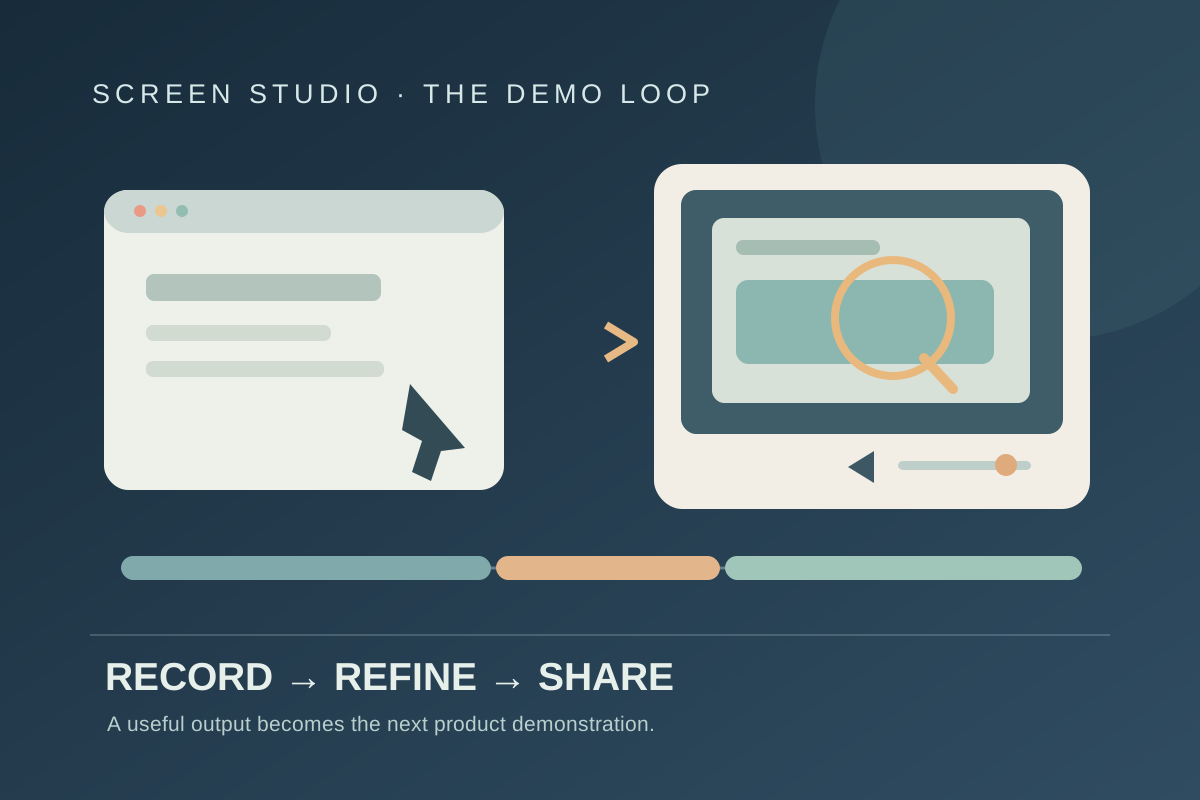
Someone makes a product demo with a screen recorder and shares the video. A viewer then asks what made the video. That is the mechanism worth studying in Screen Studio: the output can demonstrate the tool that produced it. The Mac app serves people making software demos, tutorials, courses, and social clips. It brings automatic zooms, smoother cursor motion, layout, and export into one workflow. The possibility that an output attracts attention is an inference about the product, not evidence that every video generates a sale. Product site · Course-use page
Early traction: show the finished result
The site names Adam Pietrasiak as its creator. In an early public post, Adam said the app had sold more than 400 licenses and that he was committing to it full-time. That is a founder-reported count of licenses sold at one point in time, not current user numbers, revenue, or profit. In another post, he said three years of fairly frequent posting had grown his audience to 170 followers; around three months after releasing the app, his following had grown more than fortyfold. Those posts show a long period of effort and an existing ability to design and build software. They do not make the case for effortless growth from a few posts. Early sales post · Audience post
There are two kinds of direct acquisition evidence. Adam publicly shared progress and even made the site's analytics public. Today, Screen Studio puts examples made with the app near the top of its site and has dedicated pages for uses such as courses and product demos. Its current affiliate page says users recommend the app, offers a 15% commission on the initial purchase with a 30-day tracking window, and states that most of its present reach comes from X. Together, these support public demos and referrals as meaningful routes. They do not establish a channel-by-channel sales split, and a list of logos on the site does not establish a count of company customers. Public analytics post · Affiliate page · Product site
The free boundary is the usable video
Checked on October 27, 2026, the download page says people without an active plan can use the features except exporting video files. They can explore the recording and editing workflow; payment is required when they need to deliver the result to a colleague, customer, or audience. The site lists $29 per month on the monthly plan and an equivalent of $9 per month when billed annually. Both plans include all features; the billing period differs. It also says previous one-time licenses remain valid, while new one-time purchases are no longer offered. Checkout taxes and the final payment were not verified. Current subscriber count, revenue, and profit are unavailable. Download page · Pricing and legacy-license note
The deliverable is Mac software for recording, editing, and exporting videos, with features such as shareable links included in the plans. The site's explanation of its technical difference is that it records cursor movement separately and adds the cursor back later, allowing effects such as smoothing and resizing after recording. A plausible reason to pay is less manual editing and adjustment. That is a judgment based on the feature set and the payment boundary; we have not tested or measured time saved ourselves. Feature explanation · Course-use page
One step an individual can take: choose an output you repeatedly deliver, such as a tutorial screenshot, spreadsheet template, or short demo, and make one complete sample. Show it to five people in the intended audience. Record whether they can identify its purpose, would share it, and which step they would pay to have completed. The result should be five sets of their own words and one evidence-based boundary between exploring and receiving a usable output. Screen Studio drew on its founder's software and design skills; the transferable lesson is to let the sample explain its value.