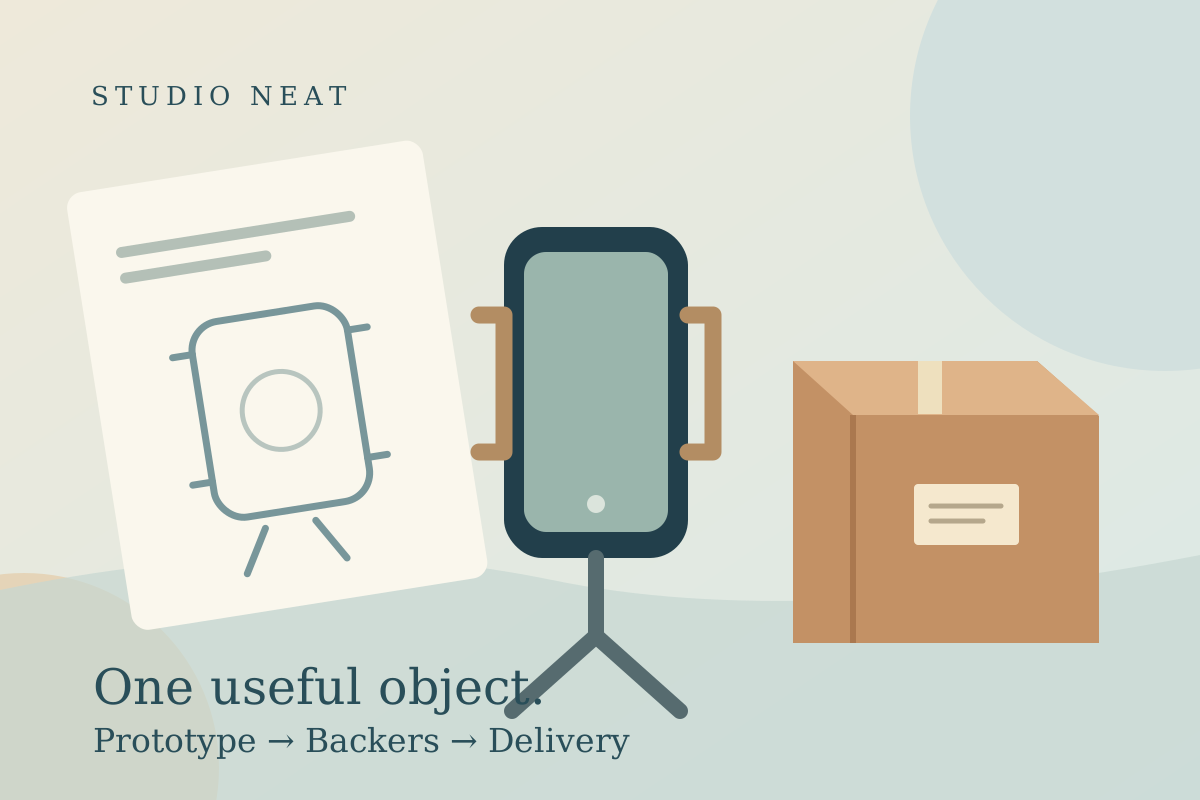
If you have designed a small physical product, should you put it on a store immediately, or first find out whether anyone will pay? Studio Neat's first Glif suggests a traceable sequence: show a specific use and a prototype, use crowdfunding to secure commitments and make the product, then keep selling through your own site. Today Glif serves people who want to put a phone on a tripod or add filming accessories. Free material helps prospective buyers understand the product and how it is made. Studio Neat · Glif product page
Start with one specific tool
Tom Gerhardt and Dan Provost founded Studio Neat in 2010. The original Glif was designed for the iPhone 4: it worked as both a stand and a mount for a standard tripod. The founders describe their aim as making simple products that solve problems. Their current store has pens, notebooks, a utility knife, and other products, while the team page lists people in customer service, assembly, and marketing. The resources of today's operation should not be projected back onto its two-designer start. About page · Original Kickstarter campaign
The Kickstarter campaign ran from October 3 to November 2, 2010. Its $10,000 goal became $137,417 pledged by 5,273 backers. Pledged funding is neither profit nor a complete measure of fulfilled retail sales. In the founders' later account, they said they began shipping to backers in early December. The first product's deliberately simple construction helped them get through manufacturing and delivery relatively quickly. This is a historical success, not a forecast for any new product. Campaign record · Founders' account
Where the first attention came from
The founders' account is unusually specific. They already had a modest connection with technology writer John Gruber. When they launched, they sent him the campaign link and offered to mail a prototype. On October 4, 2010, Gruber recommended Glif on Daring Fireball; the original post is still available. The founders said the project passed its $10,000 goal an hour and 25 minutes after that post and ended the day above $25,000. This is evidence that one relevant recommendation moved early pledges. It also reveals the starting resources behind the result: an existing connection, a clear prototype, and two designers willing to reach out. Founders' account · Original recommendation
The current site has product explanations, a making-oriented blog, a podcast, and the weekly Gazette newsletter. The Gazette page says Tom and Dan share interesting discoveries and product updates, and it invites readers to hear about new products and limited editions. A path from content to continued contact to products is visible. Public material does not reveal how many current orders come from search, email, or the podcast, so the 2010 referral cannot stand in for today's channel mix. Gazette · About page
Free explanations, paid physical delivery
On October 21, 2026, the current Glif page showed a $28 price and an “Add to Cart (Backorder)” button. This adjustable version differs from the original iPhone 4 mount. It can hold a phone in portrait or landscape orientation and has extra mounting points for accessories. The displayed price is for the site's United States setting; stock, shipping, tax, and final checkout totals may vary by place and time. We did not enter checkout. Glif product page
The free layer explains the tool, shares the making process, and keeps in touch by email. The paid layer supplies a designed, manufactured, packaged, and delivered object. The early campaign also carried a production and fulfillment obligation. In their retrospective, the founders acknowledged that their next product, Cosmonaut, shipped months later than intended after manufacturing delays. A pre-order validates interest, but delivery progress remains part of the customer experience. The company says it has been profitable since day one; the public pages do not provide enough financial detail to verify today's margins or unit sales. Founders' account · About page
One step for a solo maker
Pick one small object whose purpose you can demonstrate with a paper model or rough prototype. Film it solving a real problem, then write a simple page with the proposed price and delivery method. Show the page to five people who face that problem. Ask whether they would leave an email address to hear about a sample, or pre-order with a stated delivery date, and record their reasons verbatim. The first deliverable is one prototype page, five actual responses, and a rough cost and lead-time estimate. Use that evidence to decide whether to make a small batch; do not treat Glif's crowdfunding total as your own target.