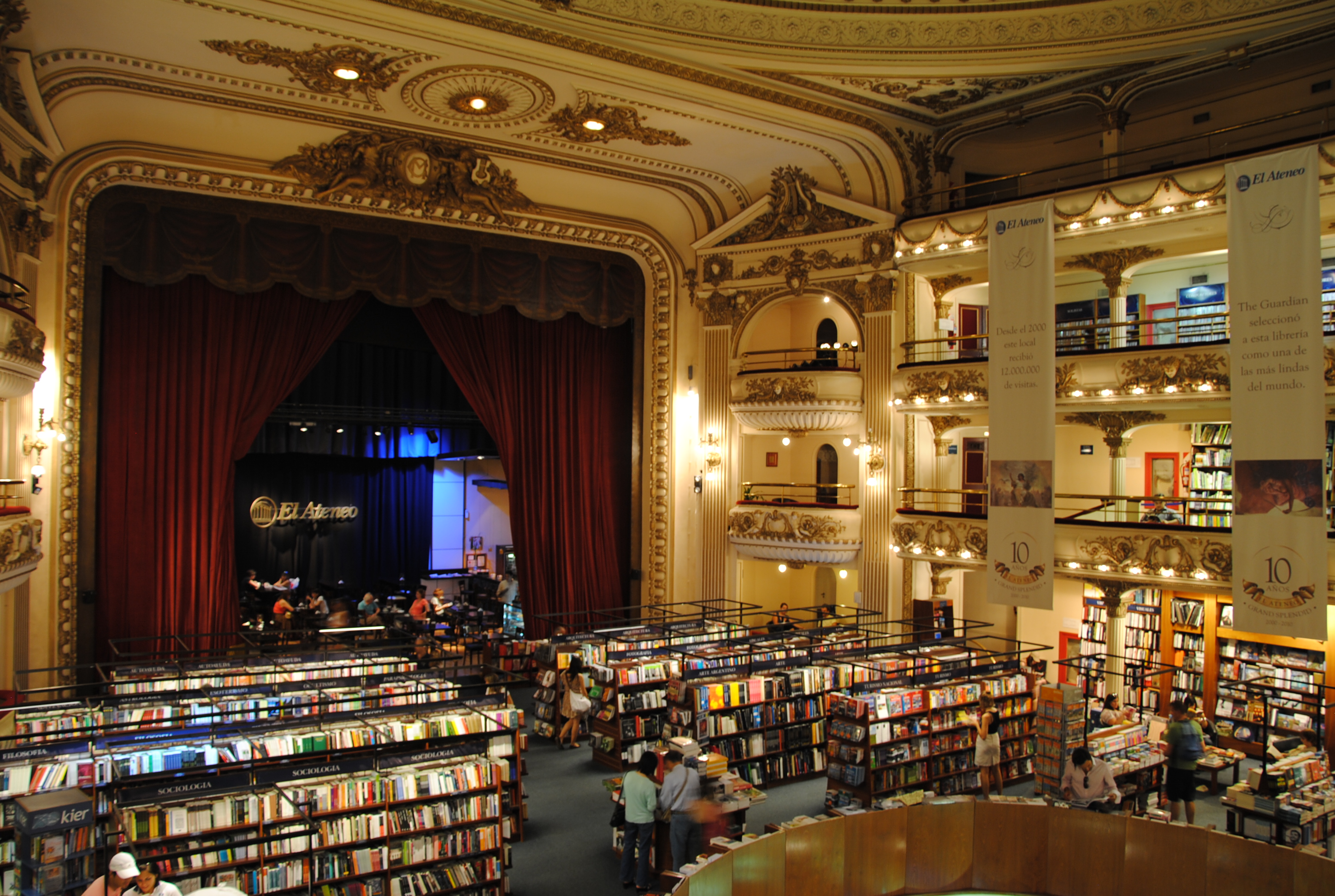
The red curtain is still there. So are the stacked balconies, ornate walls and great opening that frames the stage. Then your eye drops to the auditorium floor, and the rows resolve into bookshelves. At El Ateneo Grand Splendid in Buenos Aires, the theatre did not disappear when the bookstore moved in. 1
That is the pleasure of this particular transformation: the old purpose remains unusually easy to read. The photograph, taken in February 2011, shows both uses in one view. Follow the shelves across the foreground, then look upward at the balconies. One room offers two different explanations of what its visitors came to do.
The room had more than one career
The Grand Splendid opened as a theatre in 1919 in the city's Recoleta neighbourhood. Buenos Aires' official tourism account names architects Peró and Torres Armengol and describes a venue associated with ballet, opera and cinema. Long before the books arrived, the building was already a place where different forms of culture shared an address. 1
The city's separate history of the venue connects it with tango and Carlos Gardel, who performed there and recorded in studios on an upper floor. It also describes the building's years as a cinema. The bookstore belongs to a longer sequence of uses rather than a simple jump from an untouched theatre to a modern shop. 2
Think about the change from a reader's position. A theatre directs attention toward one performance in front of an audience. A bookstore scatters possible beginnings across hundreds of spines. The room can still frame a grand central view, but visitors choose where their attention goes next. You can trace that change yourself by following the shelves through the photograph, then looking back toward the stage.
The stage found another role
The conversion to a bookstore took place in 2000. The official city description identifies the decorated dome, painted by Nazareno Orlandi, among the features preserved, and places a café in the former stage area. Books and coffee now occupy a setting built for performers and spectators. 1
The theatre boxes also entered the new arrangement: the city's history describes their exchange for bookshelves while the original style was maintained. In the photograph, the tiers remain a strong visual clue. Even a viewer who has never visited can trace the outlines of the earlier auditorium. 2
Look at how many scales the room holds together. Individual book spines make small coloured lines. Shelf tops divide the lower floor into routes. Above them, the balconies repeat larger curves, and the stage opening supplies a single enormous frame. The ordinary activity of browsing sits inside architecture designed to make an occasion feel significant.
A transformation you can read in one picture
The 2011 photograph holds a useful record of the arrangement. The central contrast is visible immediately: bookshelves occupy the floor while balconies and a red curtain preserve the outline of the performance hall. The two identities remain readable together, down to the different sizes of their details.
You can cover the bottom half and see a theatre. You can cover the top and see a bookshop. Put the halves back together and the adaptation becomes the story. The building kept enough of its old visual language for an everyday purchase to happen inside a much larger memory of performance.