
You have seen the skyline photographs. You have read the headlines. Now you want something more specific: what to eat for breakfast in Beijing, which Chinese bands to listen to, or why a familiar brand behaves so differently on Chinese social media.
These 12 English-language websites offer different ways in. Choose a subject you already care about, then follow the suggested starting point. You can read about China without first becoming a student of its politics or history.
Choose your starting point
| Your question | Start with |
|---|---|
| How do I prepare for a first trip? | Travel China Cheaper · China Mike · China Highlights |
| Where could I go, and what could I eat? | WildChina · Lost Plate · China Sichuan Food |
| What are people watching, discussing and making? | The World of Chinese · RADII · Eye on Digital China |
| How do brands and technology fit into life in China? | Dao Insights · ChinaTalk |
| How can I begin learning Mandarin? | Hacking Chinese |
The travel sites include businesses selling trips and recommending products. The publications have different editorial interests. The access notes below distinguish a free read from a subscription or a paid experience; they refer to the linked material, not every page on a site. Links and access notes checked on September 14, 2026.
Planning your first trip
1. Travel China Cheaper: solve one practical problem
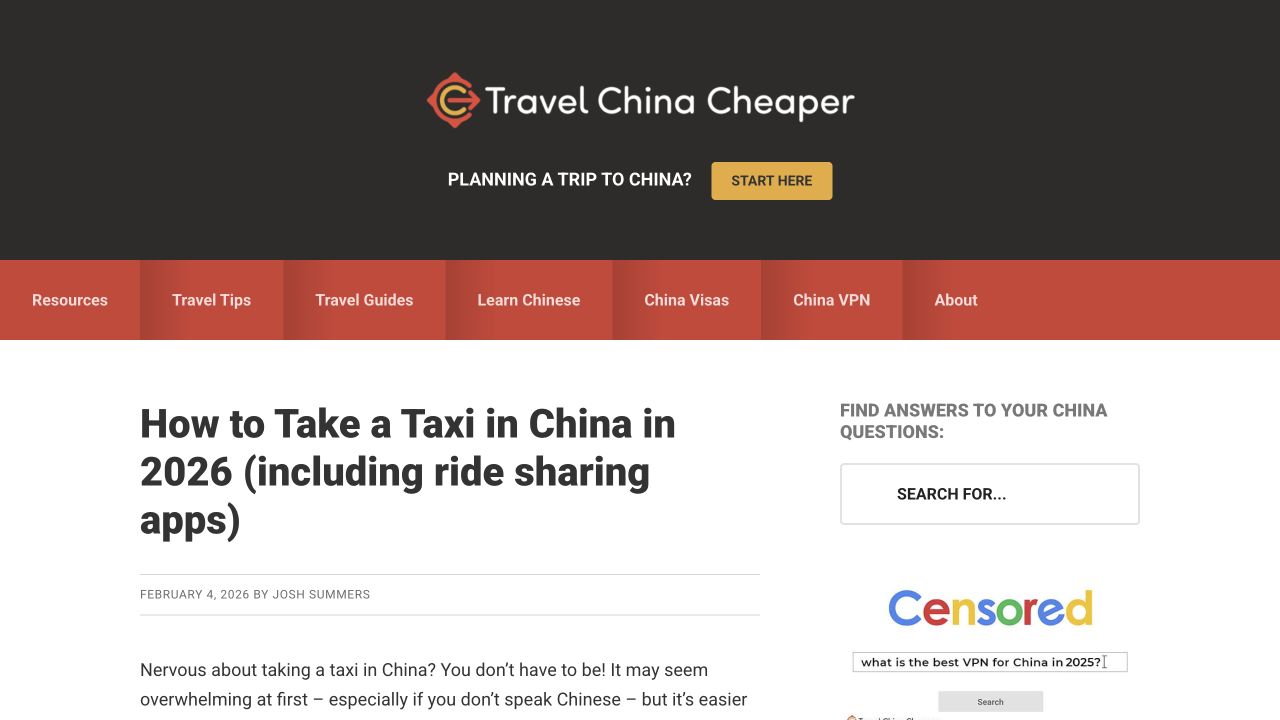
If your immediate worry is getting from your hotel to a restaurant, start with a guide that stays close to that problem. Josh Summers’s Travel China Cheaper organizes its advice around tasks such as taking taxis, using a phone and travelling with limited Mandarin.
Its taxi guide introduces conventional taxis and DiDi, then includes practical tips and useful Chinese phrases. That makes it an approachable first read before you build an entire itinerary. Keep the Chinese version of a destination’s address alongside your travel notes.
Start here: The guide to taking a taxi in China.
Access: The guide is publicly readable. The site also promotes travel products and a handbook. Recheck app instructions and local fares close to your trip.
2. China Mike: turn preparation into a checklist
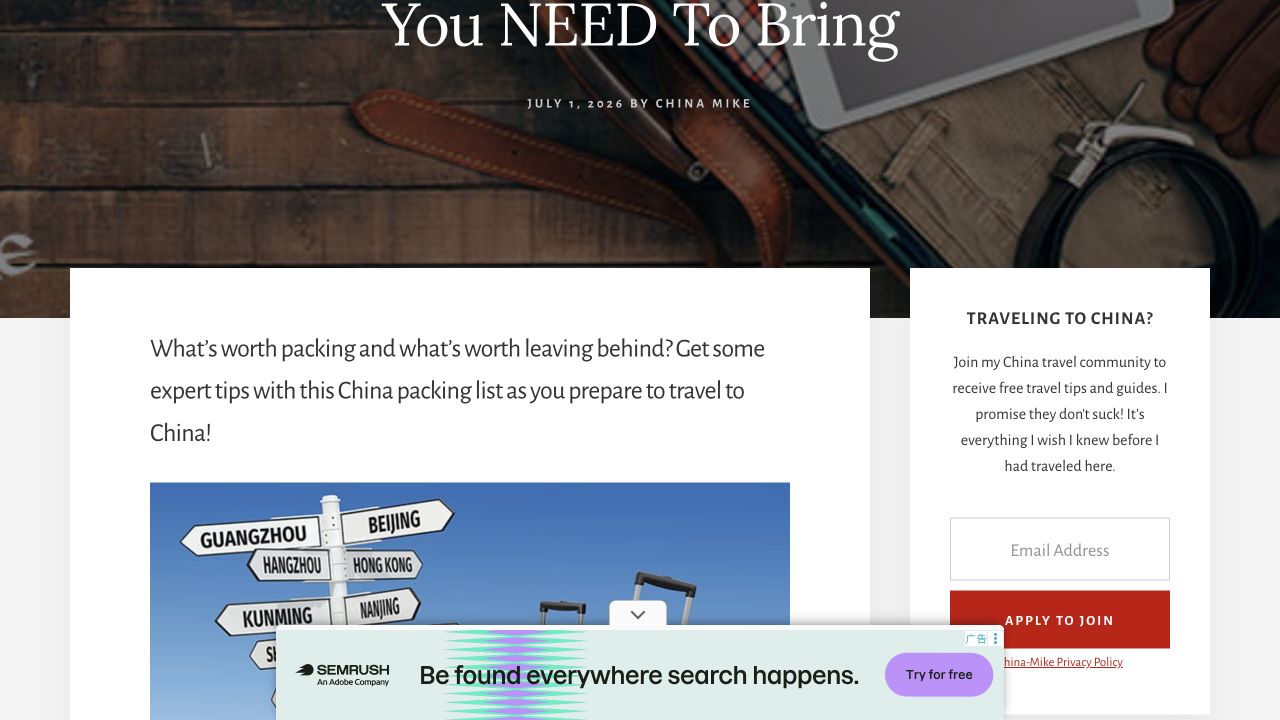
Packing is a manageable place to begin when the rest of a trip still feels vague. China Mike’s packing guide covers luggage and practical items, with links to products along the way. Its wider navigation includes city guides and maps, so you can move from preparation to a destination that interests you.
Use the list to check what you already own. Product links are optional; a useful packing decision does not require buying the author’s preferred brand.
Start here: China Mike’s China packing list.
Access: Free article, with an explicit affiliate disclosure: the publisher may earn a commission from some purchases made through its links.
3. China Highlights: sketch the whole journey
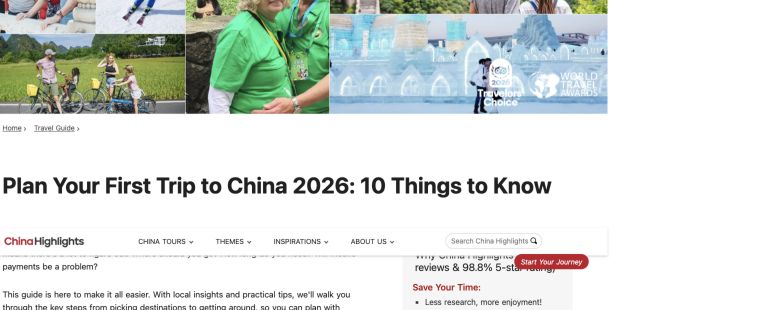
China Highlights is useful when you have moved on to bigger decisions: which cities, how many days and what kind of journey. Its first-trip guide puts those decisions into a sequence, with sections on transport, accommodation and budgeting.
The site sells private tours, which explains why its guides often lead toward a conversation with a travel adviser. You can still use the destination and itinerary material to make a shortlist before deciding how much help to buy.
Start here: Plan Your First Trip to China.
Access: Free guide; organized travel is a paid service. Confirm entry requirements with the relevant official authorities for your passport and travel dates.
Exploring places and food
4. WildChina: look closely at one place

For a sense of how much there is beyond the usual city list, try WildChina’s guide to Songyang, a county in Zhejiang. It describes individual villages, including Chenjiapu and Yangjiatang, rather than treating the countryside as a single scenic backdrop.
The mix of bookshops, guesthouses, walking routes and village life gives you several reasons to investigate the same place. It also raises a useful question while you read: how has tourism changed what visitors now come to see?
Start here: Songyang Travel Guide.
Access: Free article from a travel company selling organized journeys. Use it for place discovery; check current opening hours, transport and accommodation separately.
5. Lost Plate: start with breakfast
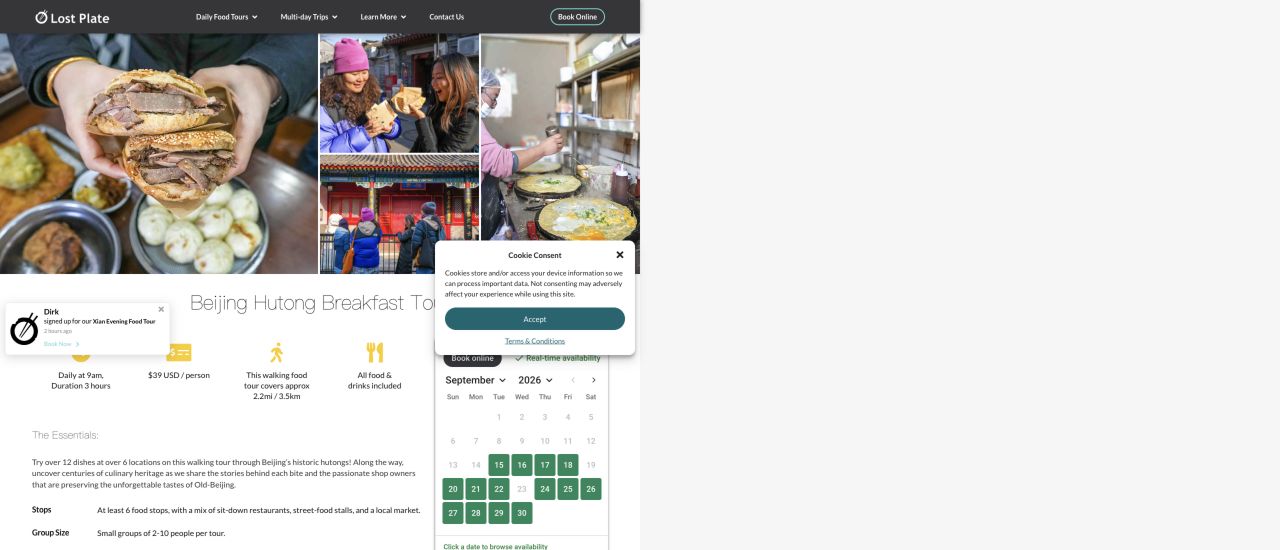
A food tour can give a first-time visitor a concrete introduction to a neighbourhood. Lost Plate’s Beijing breakfast page describes a walk through hutongs, the city’s traditional lanes, with market visits and food stops.
This is a service page, so read it as an itinerary you might book. The food photographs and description can also help you decide whether a breakfast walk suits your interests. Before booking, check the route’s walking requirements and the operator’s answers about dietary needs.
Start here: Beijing Hutong Breakfast Tour.
Access: Free to browse; joining the tour costs money. The current booking page supplies the price, inclusions and cancellation terms. Lost Plate also operates outside China, so choose the destination carefully.
6. China Sichuan Food: make something at home
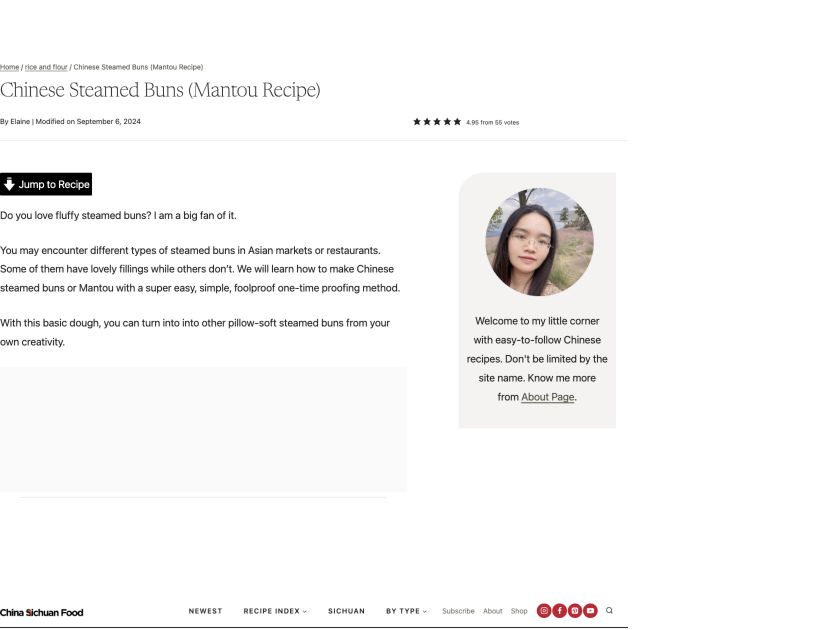
You can begin with a kitchen instead of a flight. China Sichuan Food offers English recipes with ingredient notes and photographs of the work in progress.
The mantou guide is a useful example. Mantou are steamed buns without a filling; the article shows dough preparation and shaping, alongside notes on ingredients and proofing. You have a specific result to work toward and pictures to compare with your own dough. Read through the recipe before starting so you know what equipment and ingredients it expects.
Start here: Chinese Steamed Buns: Mantou Recipe.
Access: The recipe is publicly readable. Read the ingredient and equipment notes before you begin.
Reading about contemporary culture
7. The World of Chinese: follow an everyday object into a bigger story
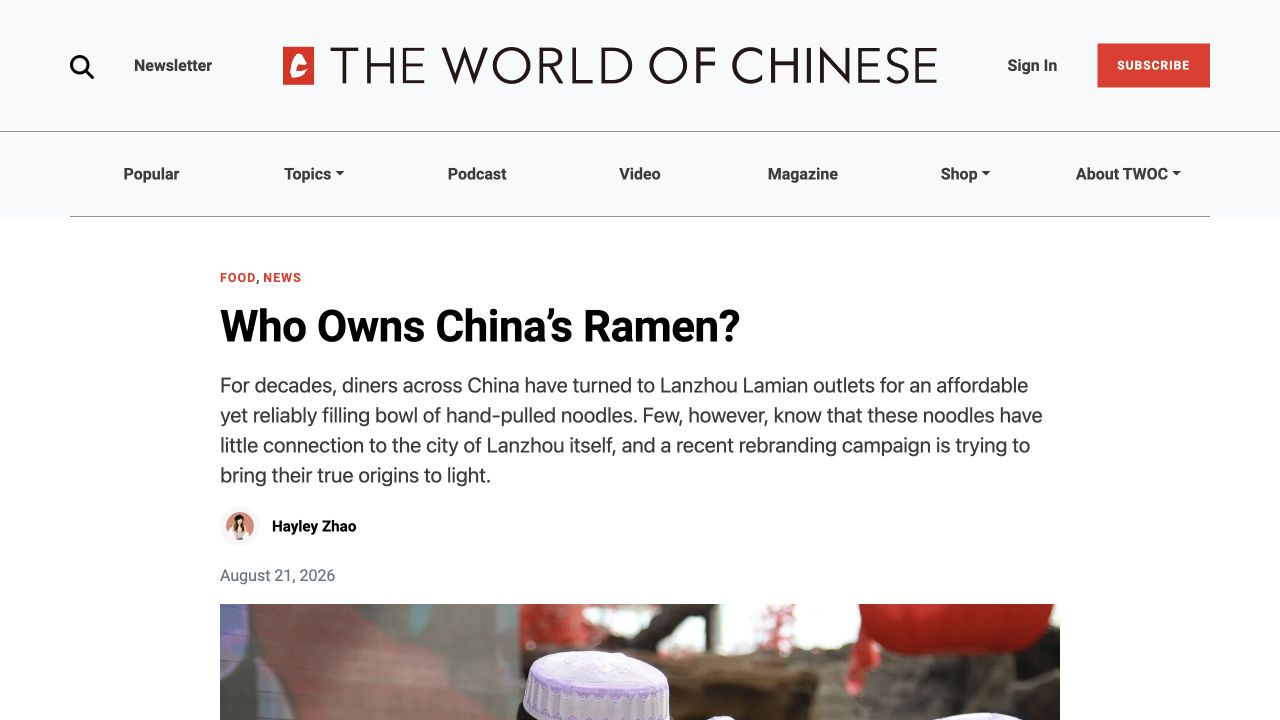
A bowl of noodles can lead to a story about migration, small businesses and regional identity. The World of Chinese’s article on Lanzhou lamian follows the relationship between a familiar restaurant name and the people running those restaurants.
That makes a useful introduction to the publication’s wider coverage of society, language and history. You begin with something easy to picture, then encounter questions you might never have thought to search for.
The publication is part of The Commercial Press, as its About page explains.
Start here: Who Owns China’s Ramen?.
Access: The article text was publicly readable. Its audio version prompts readers to subscribe; print editions are separate products.
8. RADII: enter through an interest you already have

If you like independent music, begin with RADII’s interview with Chinese Football, a band from Wuhan. The musicians discuss their sound, online audiences and reaching listeners abroad. The article includes listening links, so you can hear the work as you read about it.
This is a more enjoyable starting point for a music fan than a general introduction to “Chinese culture.” Follow one song you like, then another artist mentioned in the interview. RADII’s wider coverage also includes games and technology.
Start here: Chinese Football: The Band Taking Chinese Emo Global.
Access: Free article. RADII also offers optional paid support through Patreon. Its coverage highlights particular scenes and creators, each with their own audience.
9. Eye on Digital China: understand the context around an online debate
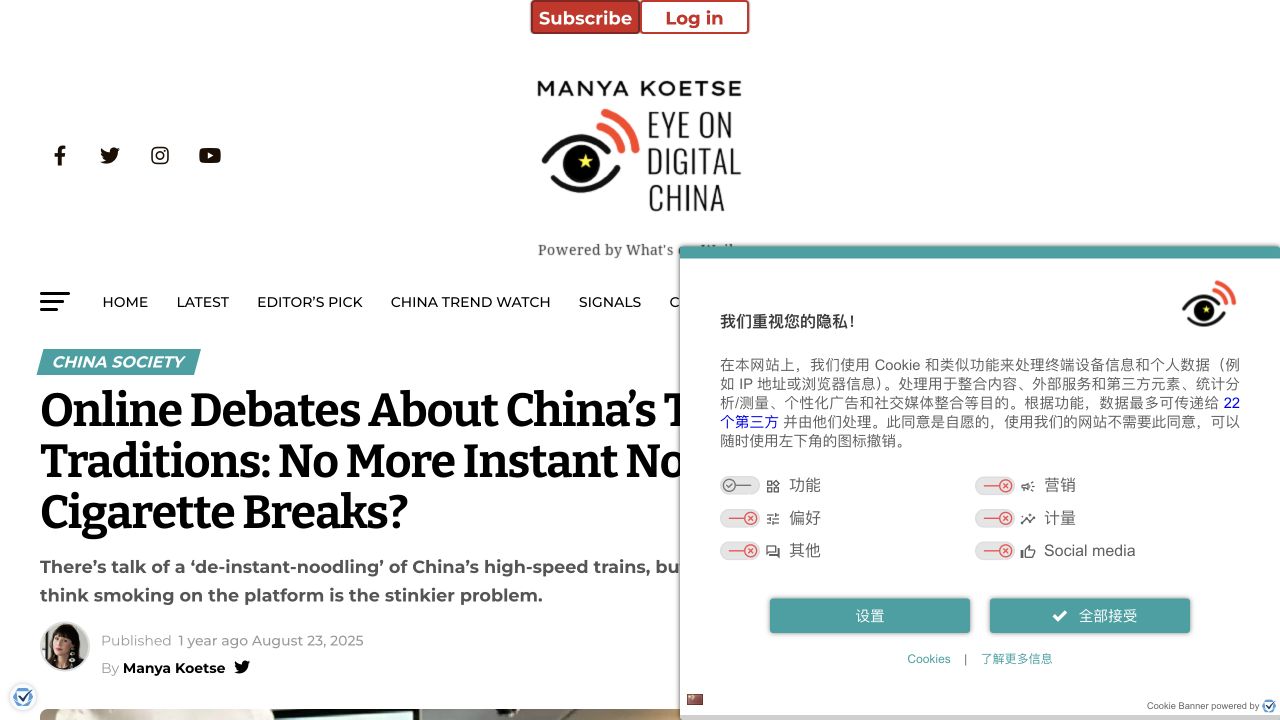
A translated social-media post can leave you with more questions than answers. Manya Koetse’s Eye on Digital China, built on What’s on Weibo, focuses on the background to online discussions and social trends. The newer name and older website address refer to the same publishing project.
For a sense of its subjects, look at the preview of a piece about instant noodles and cigarette breaks on train journeys. Even this small topic opens a question about habits and shared public space. A discussion that trends online describes the participants in that discussion; it is not a survey of everyone in China.
Start here: The train-traditions article preview.
Access: The linked page exposes a short preview. The site promotes paid subscriptions; check access before expecting the full article.
Following business and technology
10. Dao Insights: see how a familiar brand works in a different market

Recognizing a brand makes an unfamiliar market easier to approach. Dao Insights’ Duolingo case study examines how its owl mascot becomes a recurring character in collaborations with other brands.
Read it with a practical question: what makes people want to follow the next instalment of a campaign? This gives you something to observe in the examples, beyond whether you personally like the advertising.
Dao Insights originated as a Qumin Group internal newsletter, according to its About page. That marketing background helps explain its selection of stories.
Start here: Duolingo’s China strategy.
Access: The case study is free to read. Treat campaign-performance claims as claims to check against the linked evidence, particularly when applying them to a business decision.
11. ChinaTalk: spend longer with a technology question
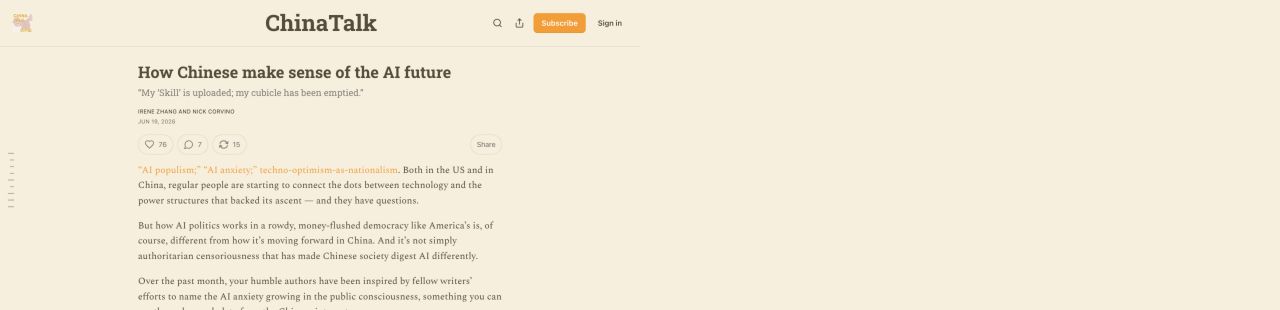
ChinaTalk is the choice here for readers willing to spend more time with an argument. Its coverage connects China, emerging technology and policy, with articles and interviews that go beyond a product announcement.
The suggested article looks at how different groups respond to AI and concerns about work. It uses interviews and references, offering several threads to follow. Read it as the authors’ analysis, and pay attention to which claims come from interviews, published research or their own calculations.
Start here: How Chinese make sense of the AI future.
Access: The linked article was publicly readable. ChinaTalk offers free and paid subscriptions. This is a longer, more demanding read than the other cultural starting points above.
Beginning Mandarin
12. Hacking Chinese: work out how to learn
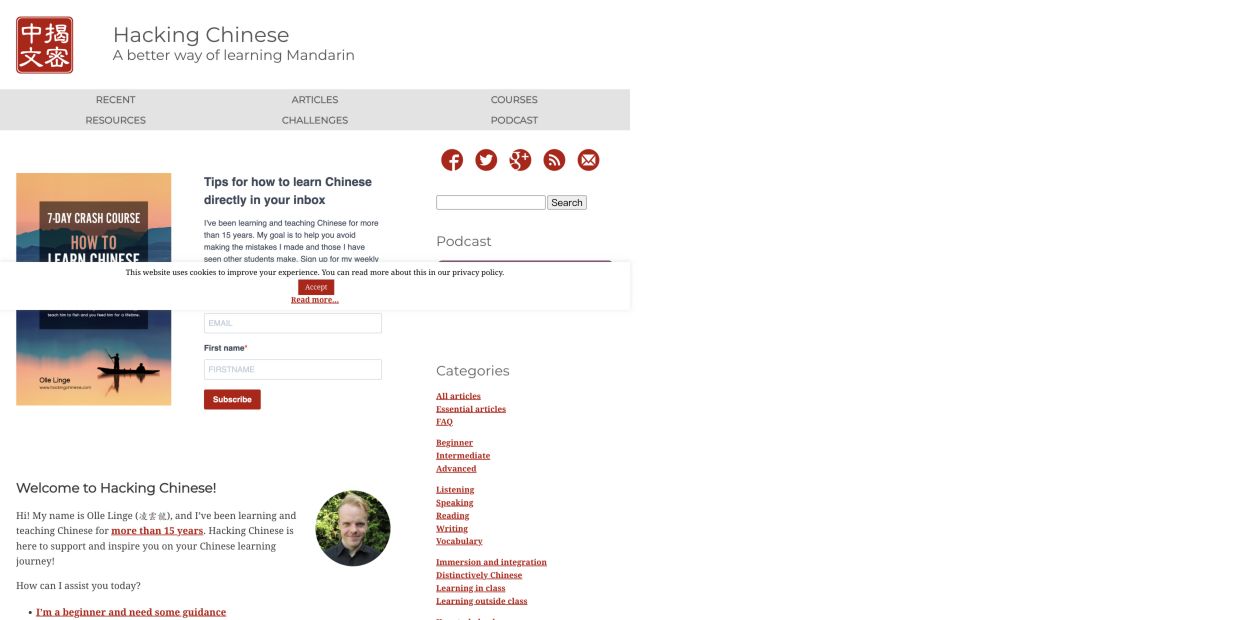
Once you want to follow Chinese-language material yourself, another question appears: how should you study? Olle Linge’s Hacking Chinese organizes learning advice around skills such as listening, speaking, reading and vocabulary.
Start with the beginner section of its article directory. Pick a question that matches your next study session, such as pronunciation or choosing listening material, and try one change before opening another guide. The site’s role in this list is to help you choose a learning method; progress still needs regular practice.
Start here: Hacking Chinese’s beginner article directory.
Access: Public learning resources, alongside paid courses and optional Patreon support. The directory lets you choose a subject before considering a course.
If you only choose two
For a first trip, pair China Highlights with Travel China Cheaper: one helps you sketch the journey, the other addresses practical tasks.
For reading from home, pair The World of Chinese with RADII. Start with the noodle story, then listen to a song from the band interview. You will have two concrete subjects to ask more about.
If brands are your interest, start with Dao Insights; save ChinaTalk for a question you want to investigate at length.
Bookmark the individual article you want to return to. Leave yourself one question beside it. That question is a useful starting point for your next visit.