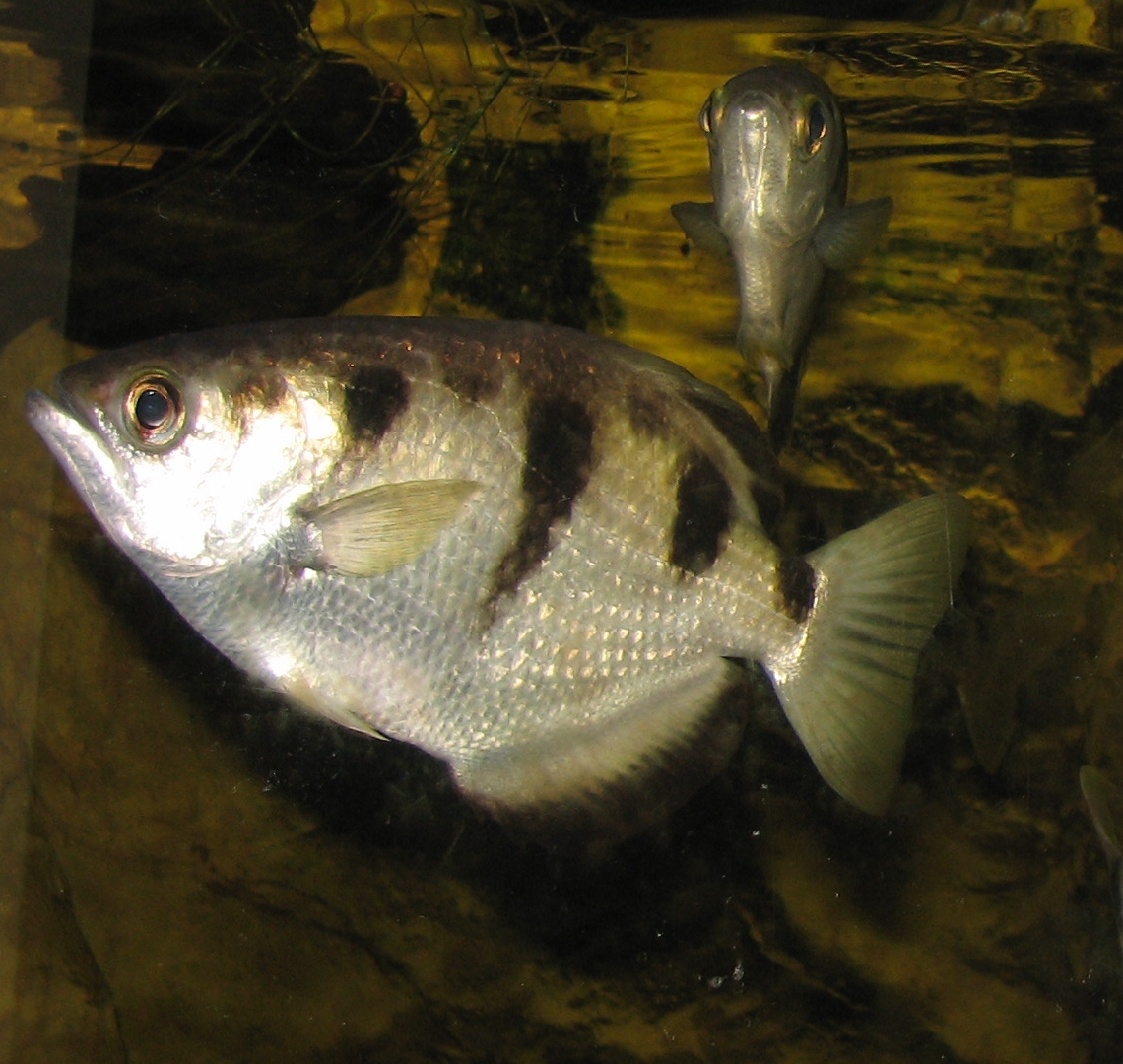
The fish in the photograph has a silvery body, dark vertical bands and a mouth that seems slightly turned toward the space above it. Nothing in the still image looks like a weapon. Yet a banded archerfish can direct a jet of water at an insect above the surface and bring its food down within reach. 1
It is a hunting method that crosses a boundary most of us take for granted. A fish lives in water; an insect on an overhanging surface is in air. The archerfish can make the water itself travel across that gap. 1
Dinner does not have to begin underwater
San Diego Zoo describes banded archerfish waiting near the surface, where insects and spiders may be available above them. Their mouths can project above the water while much of the body remains submerged. A shot that dislodges the target turns an aerial opportunity into food in the fish’s own environment. 1
That sequence is easy to imagine but contains more than one task. The fish has to detect something edible, direct its shot and be in a position to benefit when the target falls. Looking upward is only the beginning of an interaction between the animal, the moving water and the prey.
The photograph shows an individual at Newport Aquarium in the United States. Ltshears supplied the image; the capture date was not recorded in the file description, which was uploaded in January 2009. The animal is not shown firing, so the image illustrates the species rather than documenting a particular successful shot. 3

A mouth that makes the jet
The Los Angeles Zoo’s species account identifies the directed water jet as the archerfish’s characteristic way of knocking prey from overhanging vegetation. It describes an animal adapted to finding food around the water’s surface, rather than one that must wait for every meal to fall in by chance. 2
In the portrait, follow the line from the eye toward the mouth. The fish’s familiar-looking profile becomes more intriguing once you know what can emerge from it. The surprising behavior does not require a large body or an obviously specialized external appendage.
The body bands also make the animal easy to pick out against the darker aquarium background. They help identify the subject in this photograph, but they do not tell us its individual age, feeding history or accuracy. Those are separate questions that a portrait cannot answer.
The surface is a place to work
San Diego Zoo places archerfish around habitats such as mangrove estuaries and describes their association with brackish water. Branches, insects and the water below form a setting in which reaching upward can expand the available food supply. The behavior makes more sense when the habitat is included in the picture. 1
The name sounds almost too neat, but the underlying action is real. University of Bayreuth material on archerfish research likewise describes their aimed jets and the challenge of catching prey knocked from above. Their behavior has become a subject for studying animal performance, not merely a curious aquarium demonstration. 4
For now, the photographed fish is still. Its mouth gives away little. Knowing what the species can do changes the empty space above its head into something more interesting: a possible place to find dinner.