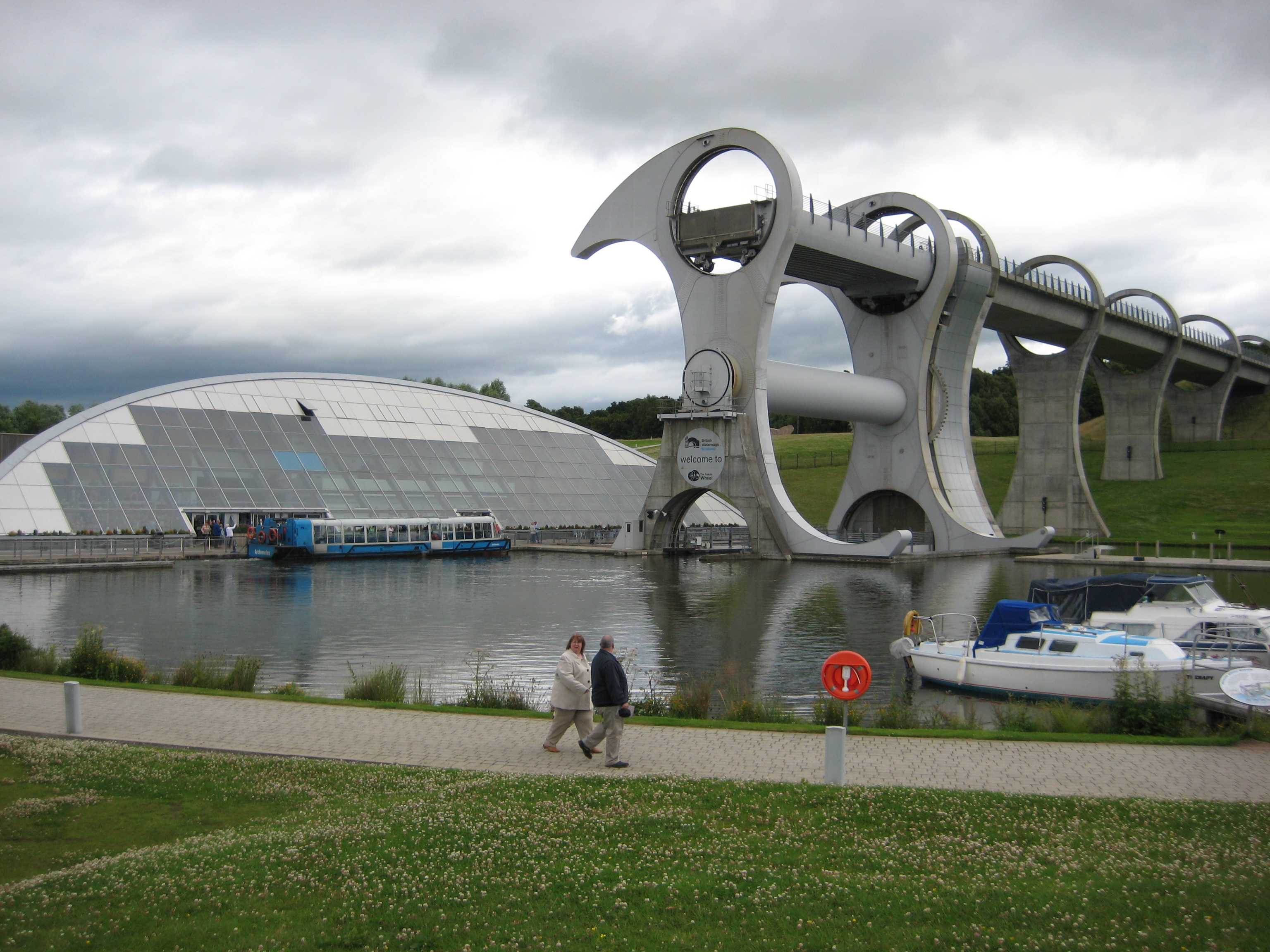
A boat normally takes you along the water. At Falkirk, the water takes a ride with the boat. Two long containers turn around a huge central axle, carrying floating vessels between different canal levels while the containers remain upright. The result looks like a fairground ride designed for an entirely different audience. 1
The photograph makes that odd arrangement easier to follow. Look for the central wheel, then the long horizontal container held between its arms. A boat is transported inside a small, movable section of water. The water does not pour from an open bucket as the structure turns; keeping the container level is part of the machinery’s job.
The boat brings its own balancing trick
The counterintuitive detail arrives before the wheel moves. Surely putting a heavy boat into one container makes that side heavier? A floating boat displaces water equal to its own weight. When the water level is maintained, the water it replaces balances the boat’s added mass. That is Archimedes’ principle at work on a very visible scale. 2
Structural engineering firm Tony Gee, which worked on the project, describes the two gondolas as equal loads moving in opposite directions: one rises while the other descends. The wheel still needs a drive system and carefully designed structure. Balance explains why the motors are not simply hauling one enormous, unmatched load straight upward. 2
Imagine marking the waterline before a vessel enters. The useful comparison is between the combined boat-and-water load and the earlier water load at that same level. Looking only at the boat leaves out the part of the weight that has departed. That missing water is the answer to the apparent puzzle.
A shortcut with a very large moving part
The wheel reopened a connection between Scotland’s Forth and Clyde and Union canals. Scottish Canals dates its opening to 2002 and explains that an earlier flight of eleven locks had once linked the waterways. The new structure also gave a former industrial site a conspicuous new purpose. 1
The Institution of Civil Engineers describes the wheel’s route to its location: it was assembled at Butterley Engineering in Derbyshire, dismantled for transport and put together again at Falkirk. Beneath the dramatic outline were less photogenic problems, including contaminated ground and foundations reaching down to bedrock. 3
That construction story changes the way the photograph reads. The arms are the obvious attraction, but the quiet parts below and beside them matter too. A moving sculpture carrying water needs stable support, reliable gates and a controlled handover to the canal at either end. The spectacle depends on those ordinary requirements being met.
The operator describes the wheel as a working sculpture, an apt description for a machine whose purpose can be watched. Its shape invites a second look; the floating boat supplies the explanation. Once you notice that the boat has replaced some water rather than merely joined it, the improbable ride becomes a lesson in something a floating hull was doing all along. 1
The photograph rewards a second look at the relationship between the container, its supports and the water below. Following those connections makes the purpose easier to understand than the outline alone.