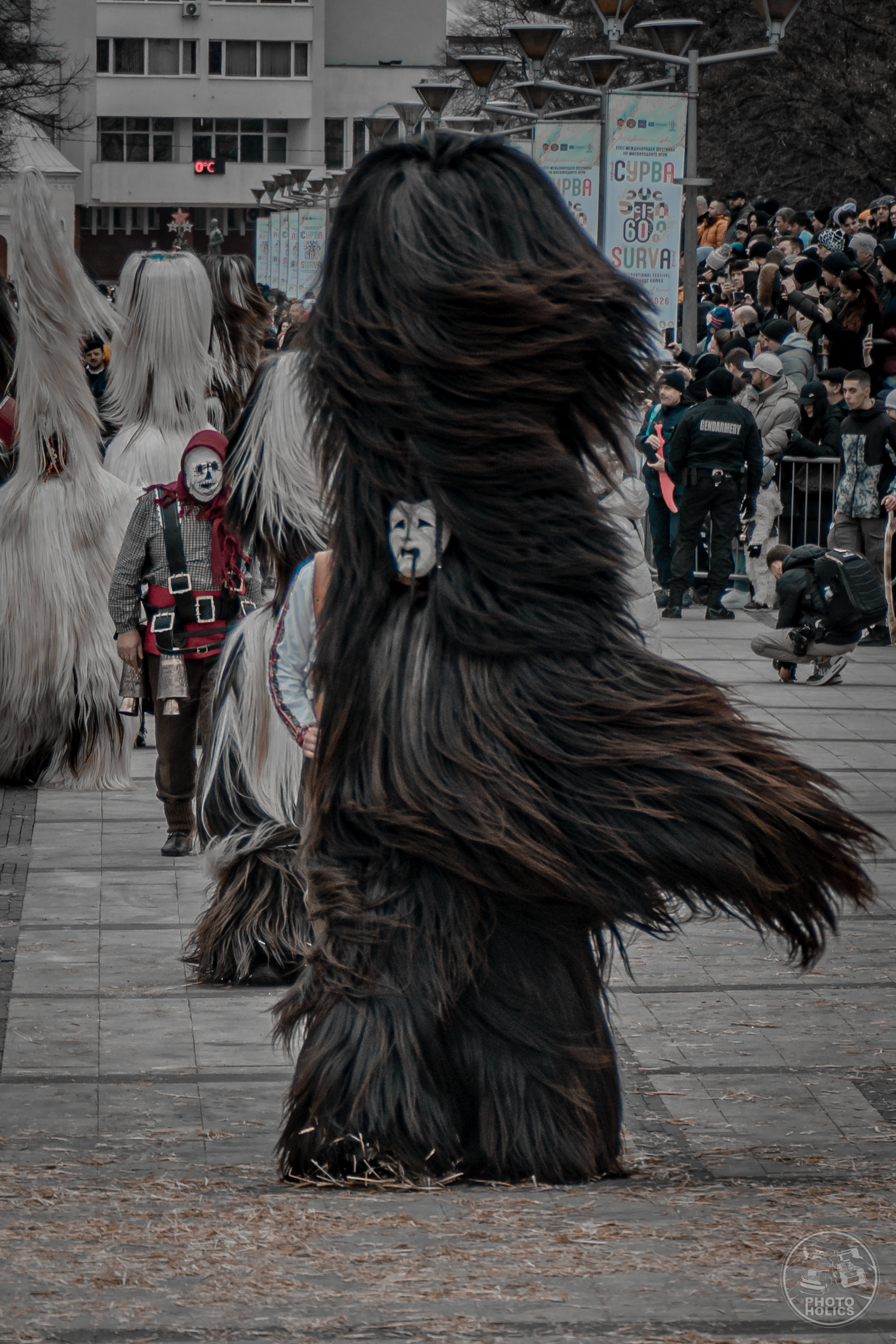
The figure in the photograph seems almost swallowed by its own costume. Long dark strands hang from the head and body, spreading outward as the wearer moves. It is an image from the Surva festival in Pernik, Bulgaria, taken in January 2026, where masquerade costumes turn a public gathering into an unusually striking scene.
The photograph introduces one participant’s appearance, not a uniform worn by every group. That variety is central to the festival. Its organizers describe a gathering that brings together different regional masquerade traditions, with distinctive materials, characters and ways of performing. 1
A frightening appearance can carry a hopeful wish
The festival’s explanation of the tradition links masks and rhythmic movement with the passing of the old year and the approach of new life. Bells, costumes and special steps belong to performances associated with wishes for health, fertility and a good harvest. Those are cultural meanings and beliefs, rather than claims that a costume produces a medical or agricultural result. 1
The visual contrast is what gives the story its hook. A form that may look unsettling to an unfamiliar viewer can participate in a celebration of renewal. Understanding that purpose changes the question from what kind of monster this is to what its wearer and community are expressing.
In this photograph the long material partly conceals the person’s outline. The camera records the movement and silhouette, but it cannot supply the sounds surrounding the performer. Bells are part of the broader documented tradition; they should not be imagined as clearly visible details when this particular view does not show them.
The village feast and the city festival differ
UNESCO’s description of the Surova folk feast in the Pernik region dates the village celebration to January 13 and 14, marking New Year according to the old calendar. It describes masquerade groups visiting houses, taking roles and sharing a celebration that involves whole families. 2
The international festival in the city of Pernik is a related public presentation of masquerade traditions, with its own programme and dates. The official 2026 invitation and programme describe that edition of the gathering. Our January 17 photograph belongs to the city festival, rather than documenting a January 13 village visit. 3
Keeping the two contexts clear makes the tradition richer. A family preparing a costume, a group visiting neighbours and a procession performing for a large audience are connected activities, but they do not have to be identical events.
A costume takes more than one day
UNESCO’s account emphasizes preparation and teaching across generations. Families collect materials, and adults help younger participants learn to make masks and costumes. What looks like a sudden burst of spectacle can rest on work and learning spread across the year. 2
The organizers also describe a living practice that changes, including wider participation by women and children. Regional names and forms vary; the labels used for one group should not erase those differences or turn every Bulgarian celebration into the same ritual. 1
Return to the moving strands in the photograph. They are the immediately memorable part, but the more lasting story is the person and community inside the costume: making something, learning how to perform with it and giving an old occasion another visible life.