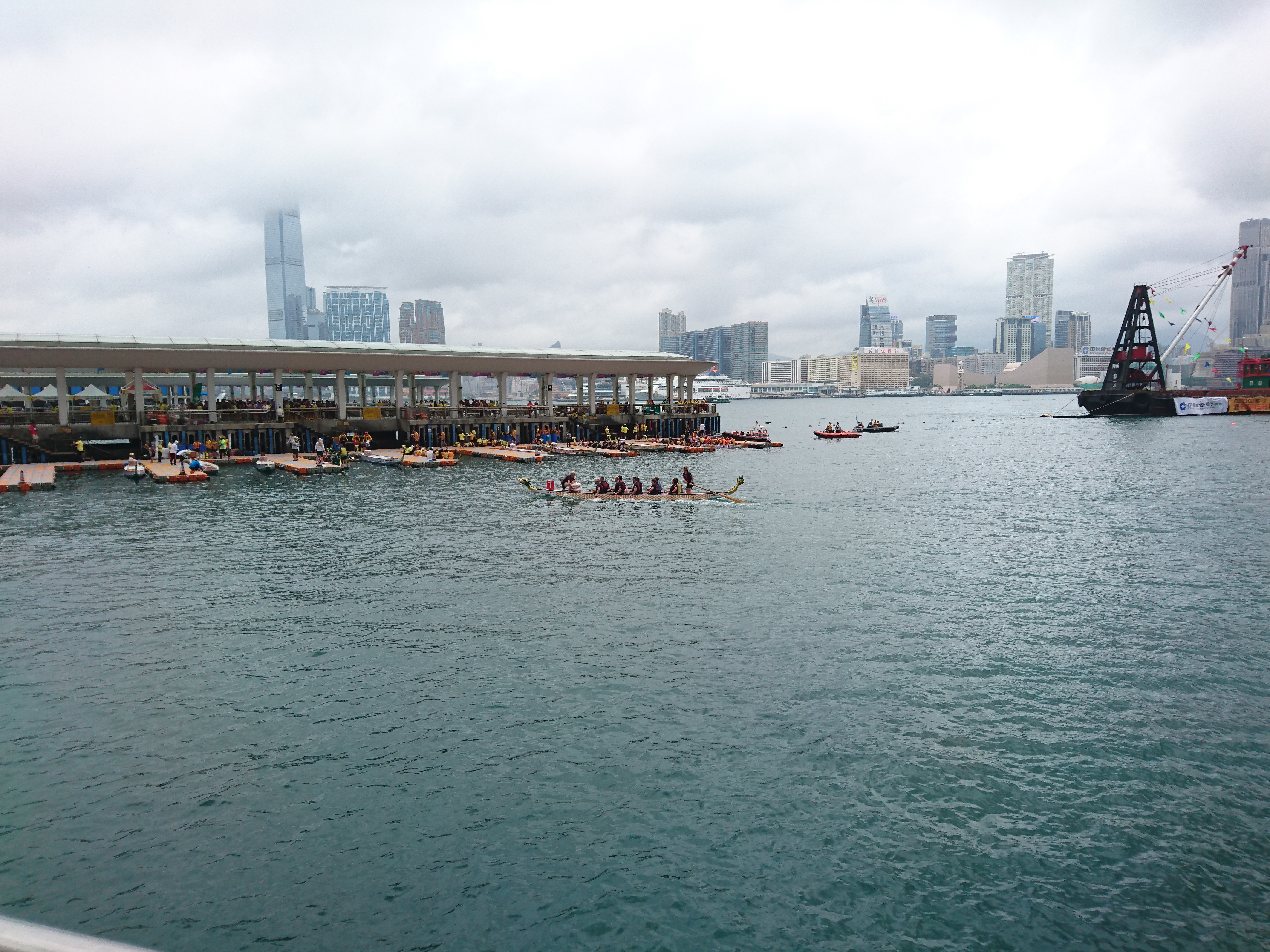
Long, narrow boats cut across the water while city buildings rise behind them. Seen alone, the photograph could introduce a sporting event. But dragon boat racing belongs to a festival whose other familiar image fits in a hand: sticky rice wrapped in leaves. The race and the food share a day with many layers of meaning. 1
This photograph records a Hong Kong Dragon Boat Carnival race in June 2017. It is one specific event, not a picture of every community’s celebration. That local setting is a good starting point, because the Dragon Boat Festival becomes more interesting when its variations remain visible.
The date connects different celebrations
UNESCO describes the festival as beginning on the fifth day of the fifth lunar month, observed by several ethnic groups in China and by communities elsewhere. Its forms include sporting events, commemorations, family practices and foods. The calendar connects them, while the details differ between places and households. 1
A spectator may first notice the boats’ rhythm and the effort of the crews. At home, the same holiday can revolve around preparing and sharing zongzi, glutinous rice dumplings wrapped in leaves. Hong Kong’s tourism board places both races and dumplings in its explanation of Tuen Ng, the local Cantonese name for the festival. 2
The contrast is part of the appeal. One activity fills a stretch of water with collective effort; the other draws attention to a compact parcel of food. Both can be familiar markers of the day without every participant giving them exactly the same explanation.
Where the poet enters the story
One widely repeated tradition connects the festival with Qu Yuan, the ancient poet and statesman. In that account, people go out in boats after his death and offer rice to the water. It is a commemorative story passed down through the festival, rather than a photographically verifiable account of how every custom began. 2
UNESCO’s description also recognizes different regional figures and practices. That wider view matters: a single origin tale can be memorable while the living festival contains more than one line of memory. People may share a name for the holiday and still inherit different local stories. 1
Singapore Chinese Cultural Centre’s Culturepaedia documents another part of that variety. Its account describes family dumpling customs, the ways local Chinese communities observe the festival and additional practices associated with particular groups. Traditions travel with people and acquire local forms rather than becoming identical wherever they arrive. 3
Look beyond the finish line
The photograph’s small boats against a much larger waterfront make one contrast immediately visible: coordinated human movement in a dense modern city. The festival’s other contrasts need words. Competitive racing sits beside remembrance; public spectacle sits beside household preparation; a shared date accommodates distinct regional habits.
That is why the dumpling question opens a better story than a race result alone. The boat explains the excitement, but the leaf-wrapped rice helps reveal the holiday around it. Together they point toward a celebration that can be watched from the shore, remembered through a story and carried home as something to share.
The photograph shows one public gathering within that wider tradition. A family meal elsewhere may look entirely different, while still marking the same festival and giving its participants another reason to remember the day.