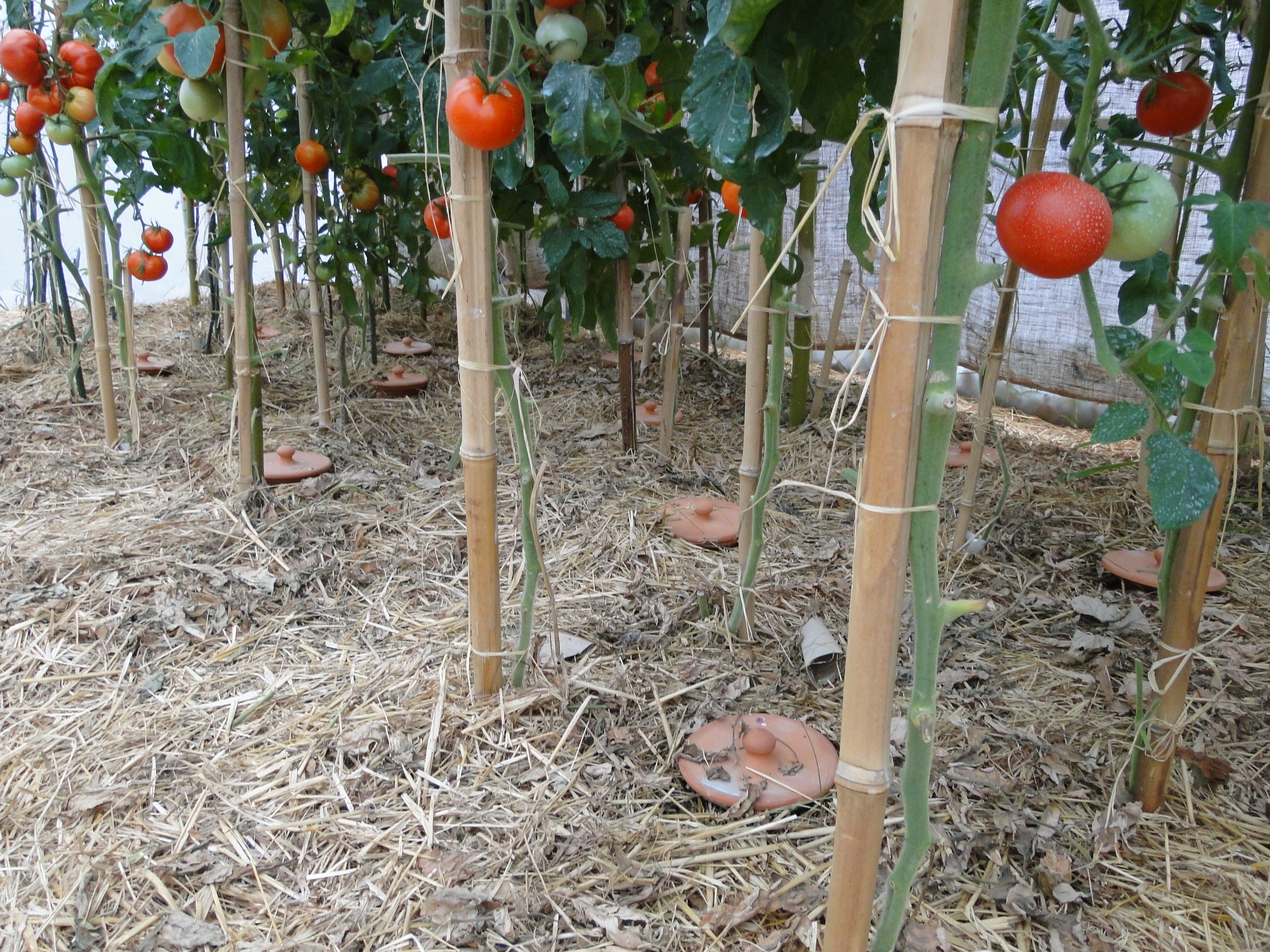
Look between the tomato stems. Those little terracotta lids mark a watering system whose most important part is hidden underground.
Beneath each lid sits an olla: an unglazed clay pot filled with water. Instead of pouring from a spout, the water moves through the porous walls into the surrounding soil. The gardener refills it from the opening above ground. [1][2]
It is an unusual job for a container. The feature that would make a jug leak is what makes this pot useful in a garden.
The wall does the watering
Think about the difference between pouring water from a jug and letting moisture pass through clay. With an olla, the vessel itself becomes the delivery surface.
The University of Arizona explains the process through soil-moisture tension: water moves from the reservoir through the porous clay toward the drier soil outside. Gardeners bury the vessel while keeping its refill opening accessible and covered. How frequently it needs filling varies with the soil, weather and plants. [2]
That is the intriguing part of the design. There is no need to arrange a separate outlet for every spot along the pot's wall. The material is doing a job that a solid, waterproof container would prevent.
See the University of Arizona's explanation and photographs of buried pots.
Where a little pot makes sense
Oregon State points to raised beds with loose, crumbly soil as a possible good match. Heavy clay soil is less suitable. It also makes an important distinction for newly planted seeds and seedlings: they need watering from above until their roots can reach the moisture around the pot. [1]
For a gardener, that suggests a modest first experiment: one suitable planting area, observed closely, with the usual watering can still available.
Before choosing a location, consider the space the vessel will occupy. Arizona's guidance notes that buried pots take up growing room and that salts can accumulate and clog the pores. It also warns that woody roots may break the pots. [2]
The cleverness is easy to appreciate. Whether it fits a particular bed takes observation.
A lid, a marker and a regular check
University of California Agriculture and Natural Resources offers some practical details worth keeping with the idea. Cover the opening to limit evaporation and discourage mosquitoes. Mark the location so someone does not step on the buried pot. Check the water level often enough to learn how quickly it empties under your conditions. [3]
The same guidance advises gardeners in areas with hard freezes to lift their ollas for winter to help prevent cracking. These are small maintenance jobs, but they belong in the picture alongside the appealing simplicity. [3]
An olla turns an ordinary property of clay into a useful gardening tool. You fill a pot, cover its opening and let moisture pass through its walls into nearby soil. What looks like a container becomes part of the watering system—and gives you a reason to pay closer attention to what is happening beneath the surface.