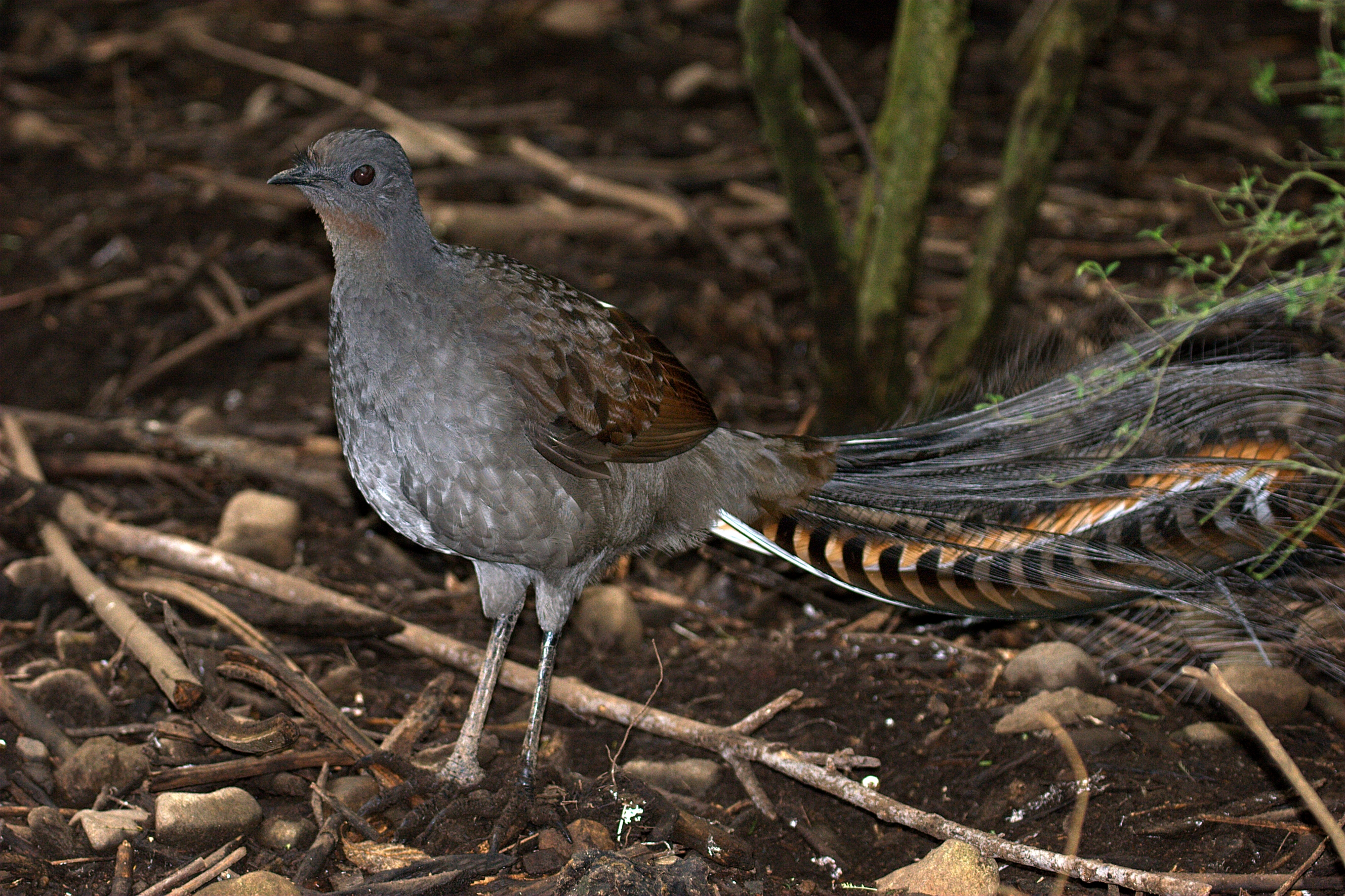
The long patterned tail is easy to notice. The voice is the part a photograph leaves out. A superb lyrebird can incorporate the calls of other birds into its own performance, turning a single singer into a source of sounds you might expect from several different neighbours. 1
John Manger’s photograph shows a superb lyrebird at Mount Buffalo in Victoria, Australia. Its feet stand among leaves and fallen wood, while the tail stretches behind it. The image records the animal’s appearance and setting. It does not prove which sounds this individual was making when the shutter opened.
Borrowing a voice is part of the performance
The Australian Museum describes a repertoire that combines mimicry with the lyrebird’s own whistles, cackling notes and other calls. Native birds are among the sources it can imitate. The result is more than an impressive human party trick: these sounds belong to the bird’s communication and breeding behaviour. 1
Researchers Anastasia Dalziell and Justin Welbergen explain that vocal mimicry can serve different purposes in birds, including impressing listeners or influencing their behaviour. Their discussion places lyrebirds within a wider group of skilled mimics. A borrowed call can matter to another animal even when a human hears only a clever imitation. 2
That makes listening a different kind of puzzle from identifying the bird in a photograph. A recognizable call does not always identify the creature producing it. The source of a sound and the animal making that sound can be different, especially in a habitat where accomplished mimics live.
The famous machine noises need context
Lyrebirds are often introduced through accounts of chainsaws, alarms and other human-made sounds. The researchers caution that recordings of such mimicry are rare and that reports can involve captive birds or natural calls mistaken for mechanical sounds. The distinction belongs in the story, rather than disappearing behind the most spectacular example. 2
A wild lyrebird’s ability to imitate neighbouring birds is already remarkable. It does not need an unsupported claim that every individual has a library of car alarms. This photograph accompanies a species account; it is not evidence that the Mount Buffalo bird copied any particular machine.
A tail can become a roof
The New South Wales environment department describes the male superb lyrebird’s display mound and the way he spreads his tail forward over his head while singing. The same account explains that females lack the adult male’s distinctive lyre-shaped tail. The ornamental outline is part of a larger courtship performance involving position, movement and sound. 3
Away from display, lyrebirds spend time scratching through leaf litter for food. Their strong legs and claws help turn the forest floor into a feeding place. That everyday activity offers another way to read the picture: behind the elaborate tail is a ground-foraging bird working through the material beneath its feet. 3
The photograph therefore contains only half the attraction. You can examine the feathers and the long toes, but the vocal performance remains outside the frame. The surprise is knowing that a bird with such a conspicuous visual signature can also borrow the acoustic signatures of animals around it.
Look again at the bird among the leaves. The visible details help identify the animal; knowing about its borrowed sounds adds a second way to encounter it, one that asks for patient listening.