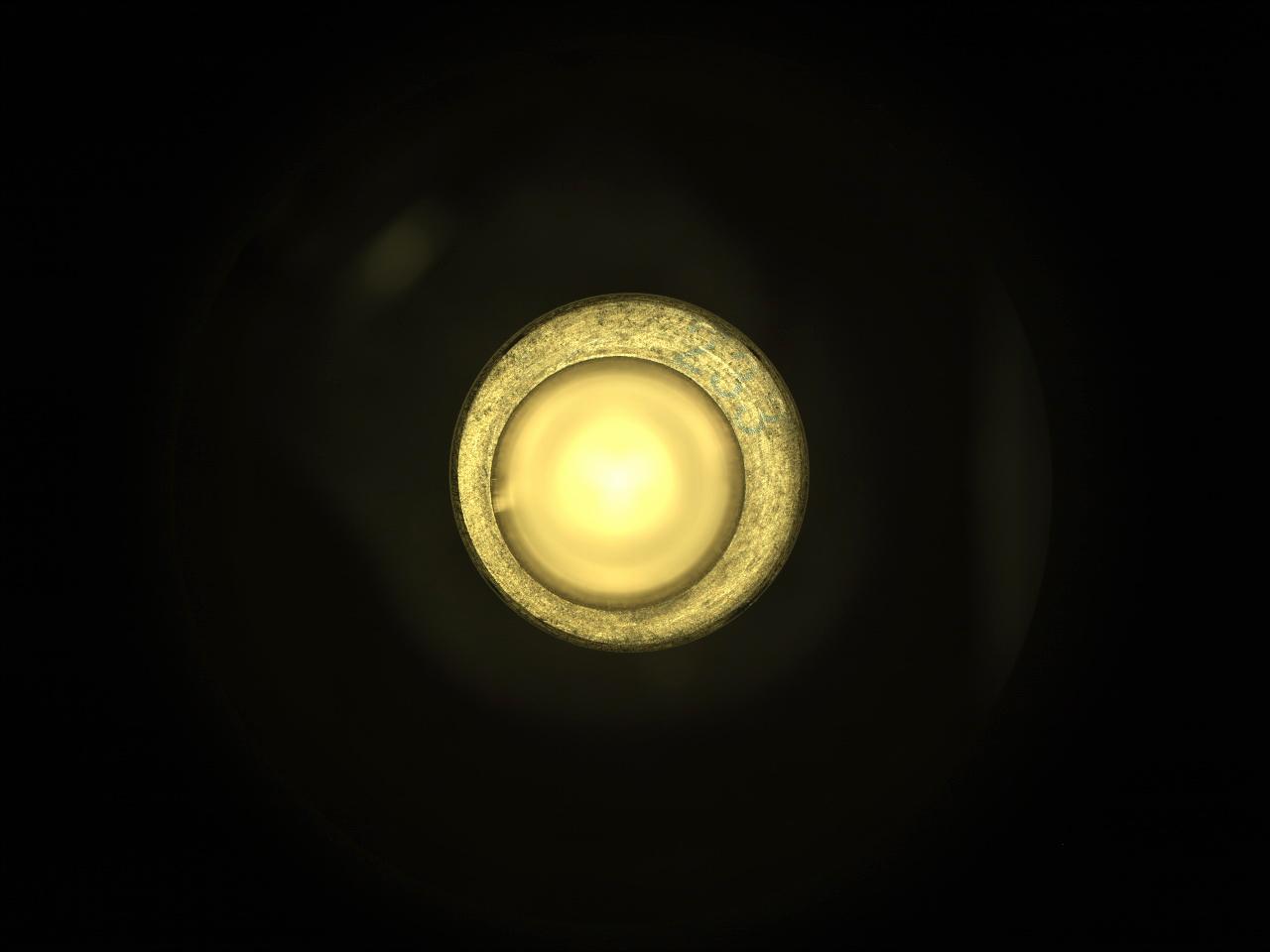
There was a hole in the rock. There was also a photograph looking into the sample tube. The missing part was what the tube was supposed to hold. On August 6, 2021, NASA’s Perseverance rover completed its first attempt to collect a Martian rock core, but the sample tube came up empty. 1
The image here shows tube number 233, photographed that day by CacheCam, the rover’s Sampling and Caching System Camera. The bright circular interior makes a remarkably direct illustration of the problem: the container is there, while the expected rock core is not. 2
A completed action is not the same as a collected sample
NASA’s first report said the sampling sequence had run, but the data indicated that no rock sample had been acquired. The team’s initial assessment leaned toward the target rock behaving unexpectedly during coring, rather than an immediate assumption that the hardware had failed. It was an investigation in progress, not a settled explanation on the first day. 1
That distinction is the heart of the story. A visible drill hole demonstrates that the rover interacted with the rock. It does not, by itself, demonstrate that an intact cylinder of material survived the process and entered storage. Each stage needs evidence of its own.
The tube photograph supplied one part of that evidence. It was not a picture of a core that later vanished during transport to Earth. The missing core had already become a problem on Mars, inside the rover’s own sampling operation. 12
The rock was too willing to fall apart
Later mission reporting described the target as too crumbly: material broke into powder and fragments too small to remain as the intended core. JPL subsequently undertook tests on Earth to understand the behavior of that first target, nicknamed Roubion, using rocks and a duplicate of the rover’s drill. 3
A rock can look solid at the surface while responding poorly to the particular forces involved in coring it. That makes the episode more interesting than a simple machine-versus-stone failure. The collection system had to work with the properties of the material it encountered, and those properties could differ from expectations.
The tests were part of learning from a result the team had not reproduced in exactly the same way before launch. A sample attempt with no captured core still generated information about the target and the interaction between rock and tool. 3
The story continued beyond the empty tube
Perseverance later moved to another target. NASA reported its first successfully collected rock sample in September 2021, after drilling a rock nicknamed Rochette. The empty first attempt was therefore an episode in the mission’s developing sampling work, not the end of the system’s usefulness. 4
This article looks back at that documented sequence. It does not present the 2021 photograph as a new event, promise a particular future sample-return schedule or claim that the empty tube contained evidence of life.
The image remains effective because it turns a distant engineering problem into something instantly recognizable. You can prepare the container, carry out the operation and see the mark left behind—and still need to ask the simplest question of all: did the thing you wanted actually make it inside?