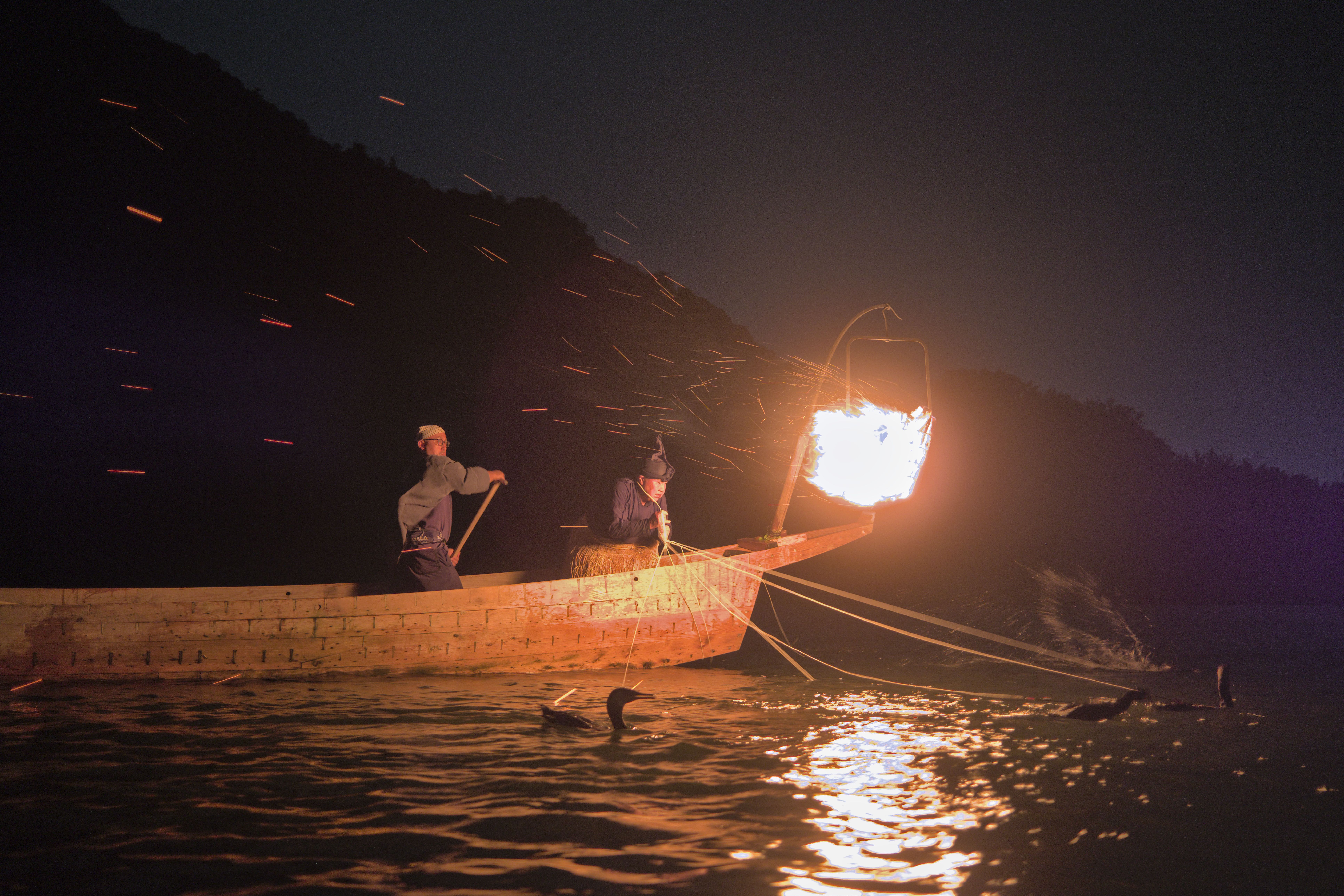
The fire hangs out over the water. Below it, several dark birds swim beside a boat, while a fisherman holds lines leading toward them. The photograph is from the Nagara River in Japan, and the birds are part of the fishing operation.
The practice is called ukai, or cormorant fishing. Rather than casting a line toward a fish, a fishing master works with diving birds. They catch fish underwater and return to the boat, where the master retrieves the catch. 1
Follow the lines in the fisherman’s hand
The Japan Tourism Agency’s account of the Nagara tradition describes masters managing groups of cormorants with leads. The fish include ayu, often called sweetfish. A cord around a bird’s neck prevents it from swallowing larger catches, which the fisherman then recovers. 1
That mechanism belongs in the explanation. The striking image is also a working arrangement involving restrained animals. Understanding the picture means noticing the lines as well as the flames.
In the July 2025 photograph, those lines connect the fisherman’s hands to the birds around the boat. The fire makes the upper part of the scene immediately dramatic. Lower down, the smaller shapes on the water explain why the boat is there at all. The two details need to be read together.

A river tradition with more than one local setting
The Nagara practice is associated with Gifu and with Oze in Seki. The tourism agency traces written records of this fishing tradition back to 702. It also describes the master’s role extending beyond the night’s fishing, with birds cared for at home through the year. 1
Those details place the spectacle in a longer routine. The photograph captures an illuminated moment, but the work described in the source includes managing a group of living birds over time. The visible performance is one part of that relationship.
A separate operator in Oze describes spectators following fishing boats in the darkness. Its account emphasizes the sounds around the river: the master’s calls, the movement of the boats and the birds in the water. This is the Oze operator’s description of its own setting, not a report of sounds recorded in our Gifu photograph. 2
Two photographs, two different evenings
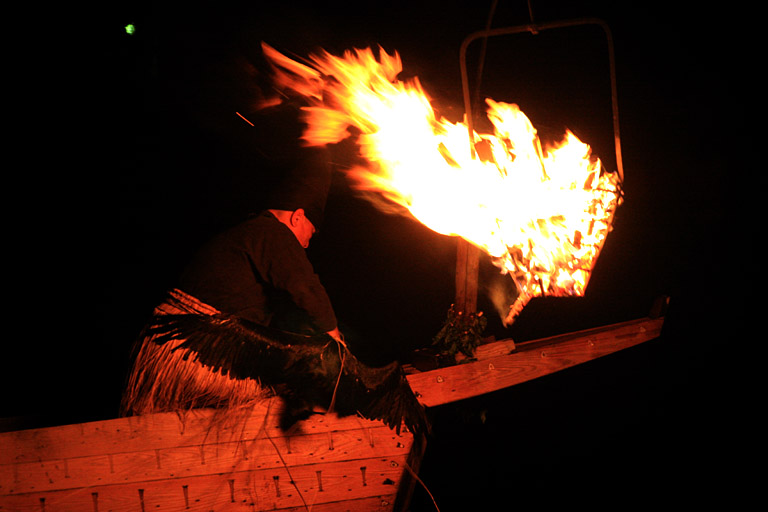
The main image was taken on July 7, 2025. The second photograph records Gifu ukai on August 1, 2007. They are independent views taken years apart, rather than consecutive frames from one fishing trip. 34

The older picture brings attention to the fire basket and the fisherman beside it. The newer one gives the birds and the leads more room in the frame. Together, they make the same unusual combination easier to understand without pretending to follow one particular catch from start to finish.
Imagine seeing only the flames: it might look like a fire display. Imagine seeing only the swimming birds: it might seem like wildlife beside a boat. The full scene reveals something more specific, a fishing tradition in which the master, the cormorants, the boat and the light all have a place. The question in the picture is answered by the details nearest the water.
Notice how little of the river is illuminated beyond the boat. Within that small patch of light, the lines and birds become readable. The photograph’s drama comes from the fire, while its explanation rests in those quieter details.