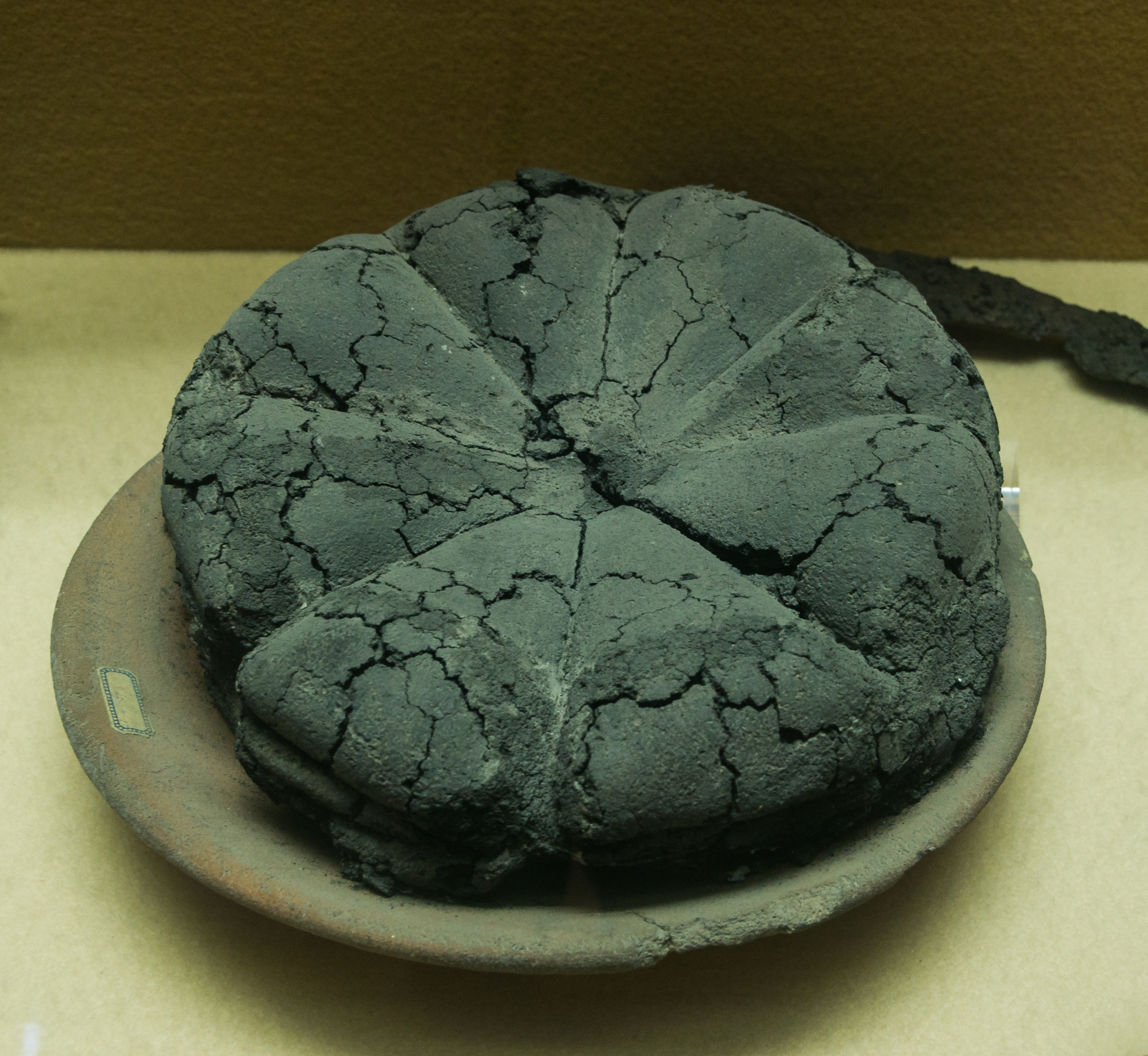
At first glance, it looks like a loaf left far too long in an oven. Its surface is dark, cracked and divided into familiar-looking sections. But the object in this photograph belongs to the Roman world: a carbonised loaf photographed in the Antiquarium at Boscoreale, near Pompeii, in July 2015. 1

The strange part is how little explanation its outline needs. A broken tool may require a drawing before its purpose becomes clear. This rounded object still suggests something made to be divided and eaten. The resemblance brings the past close, even though the material is now an archaeological find rather than food.
An ordinary object in an extraordinary record
Vesuvius' eruption in AD 79 buried Pompeii and preserved an exceptional body of evidence about the surrounding Roman landscape. The Archaeological Park's account of the Boscoreale collection includes a carbonised loaf recovered inside a Pompeian building. Its inventory of carbonised breads also identifies cereal bread from Pompeii associated with AD 79. 23
Those records establish the broad setting, while the maker and exact recipe of the photographed loaf remain unidentified. Its recognisable form still prompts good questions. How was a round loaf shaped before baking? How did the top become divided? An ordinary object directs attention toward the practical work behind a meal, even where the individual story has been lost.
In the picture, the loaf sits on a pale support against a museum background. Cracks cross the surface, and the top has a segmented appearance. Lighting and display conditions affect its colour, so the greenish cast in the photograph should not be read as the original colour of Roman bread. The evidence is the surviving object and its documented context, not a fresh loaf's appearance.
A city had to make its bread
The park's excavation guide describes Pompeian baking installations with millstones and ovens. These remains put bread inside a working system: grain needed processing, dough needed preparation, and ovens needed fuel and attention. A loaf was the end of several jobs, not simply an item that appeared on a table. 4
That changes how the museum object can be viewed. Its round shape is a product of human work. Beside the grand buildings and painted walls associated with Pompeii, bread introduces another scale of life: repeated production, meals and the material demands of keeping people fed. The connection is ordinary, which is precisely why it is effective.
The Boscoreale museum's own explanation places its finds within the relationship between people and the Vesuvian environment. Agricultural resources, fishing equipment and other remains help reconstruct life across the territory. The loaf fits that broader collection of evidence about making a living and using local resources. 2
Recognisable does not mean fully understood
A familiar shape can make an ancient object seem easier to interpret than it really is. We can recognise bread while still leaving questions open about this particular piece. That balance gives the photograph its force: an object from an immense catastrophe retains the outline of something small and everyday.
Look once more at the broken surface. The survival is not a return to its former condition; the loaf has been profoundly changed. Yet its form still allows a present-day viewer to connect an archaeological display with the simple act of making something to eat.