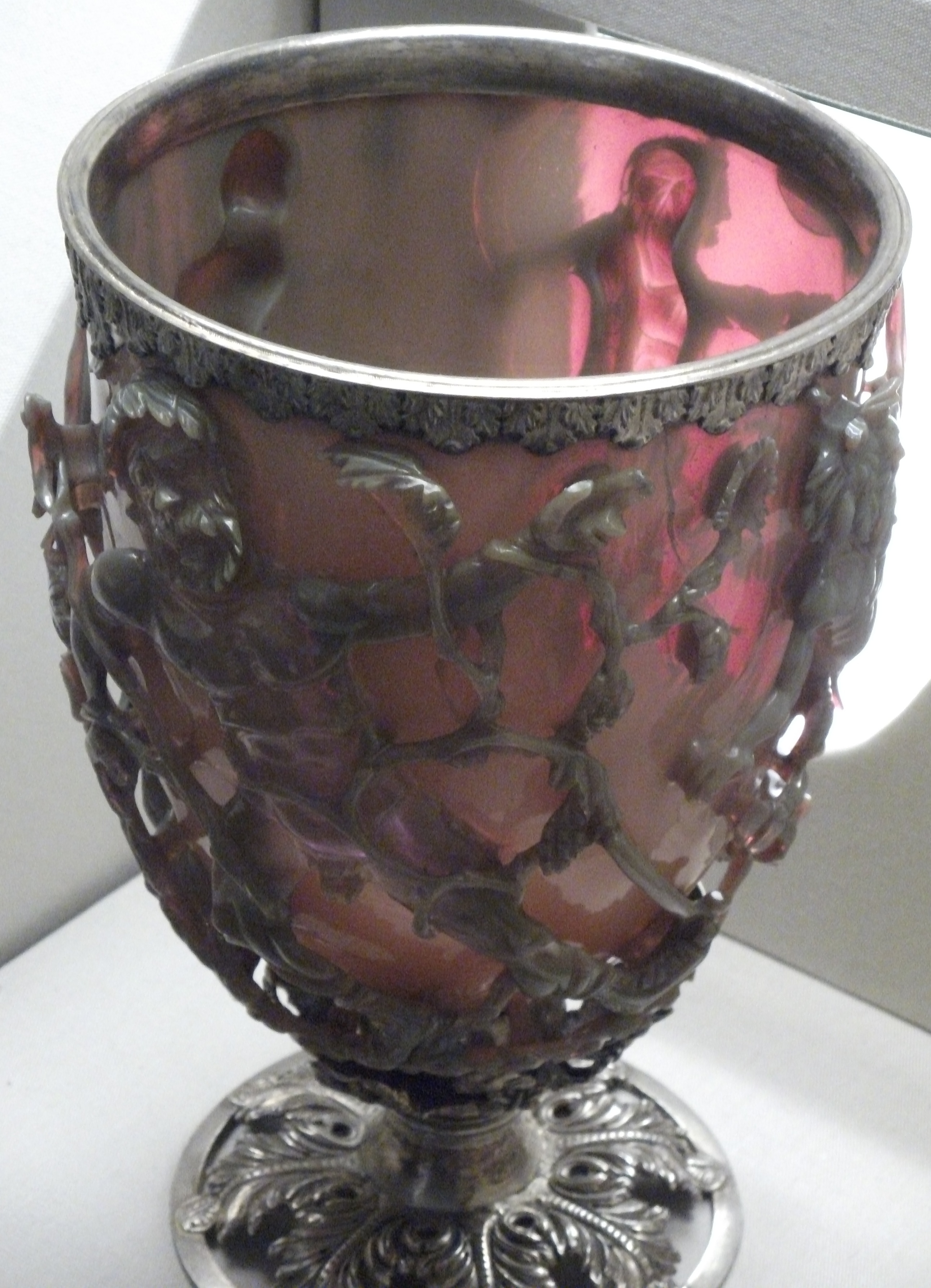
One photograph shows a greenish vessel wrapped in figures and vines. Another reveals a reddish glow through its glass. Both depict the Lycurgus Cup, a late Roman object now in the British Museum. Its changing appearance belongs to the material itself, rather than to a modern colour-changing bulb placed inside it. 1
The cup is an example of dichroic glass: the colour seen in reflected light differs from the colour seen when light passes through it. The Corning Museum of Glass describes the Lycurgus example as green by reflection and magenta by transmission. The direction of the light changes what reaches the viewer. 2
The glass holds the explanation
The British Museum’s gallery guide attributes the effect to tiny quantities of gold and silver within the glass. Its description contrasts an opaque green appearance with a translucent red one. A material that initially looks fairly solid can therefore become much more luminous under a different lighting arrangement. 1
Corning’s explanation connects this family of ancient glasses with minute metallic particles and light scattering. That is a more specific explanation than saying the cup changes colour with its mood, temperature or contents. Those might make an entertaining retelling, but they are not the documented reason for this object’s two appearances. 2
The photographs are separate museum views, taken under different conditions. They illustrate the contrast without functioning as a controlled experiment: the camera angle, reflections and illumination differ too. Notice how the figures remain recognizable even when the background glass looks quite different.
A cage surrounds the vessel
Colour is only one reason to look closely. The museum classifies the object as a fourth-century drinking cup and records scenes representing the death of the mythical King Lycurgus. Raised figures and the surrounding network give it a cage-like appearance, with spaces that invite the eye to separate the surface decoration from the vessel behind it. 3
In the green view, the bright reflections help define the relief. In the red view, light passing through the bowl makes the space behind the figures more conspicuous. The same outlines become easier to read in different ways, which is why simply labelling one image the correct colour would miss the point.
The story of Lycurgus belongs to mythology. The museum’s guide describes the king entangled in a vine after attacking Dionysus and his followers. It explains the imagery on the cup; it does not establish that the pictured event happened to a historical ruler. 4
The modern appearance has its own history
The collection record lists glass and silver and notes the mounted rim and foot. The gallery guide explains that the gilded silver fittings were probably added much later, in the eighteenth century. What is on display therefore combines the Roman glass with later elements of the object’s collecting history. 13
That detail makes the cup more interesting than an isolated ancient trick. It has been made, kept, altered, studied and photographed, with each stage influencing how people encounter it. Yet the central visual puzzle remains remarkably direct: move from light reflected by the surface to light travelling through the glass, and the vessel gives the viewer another colour to notice.
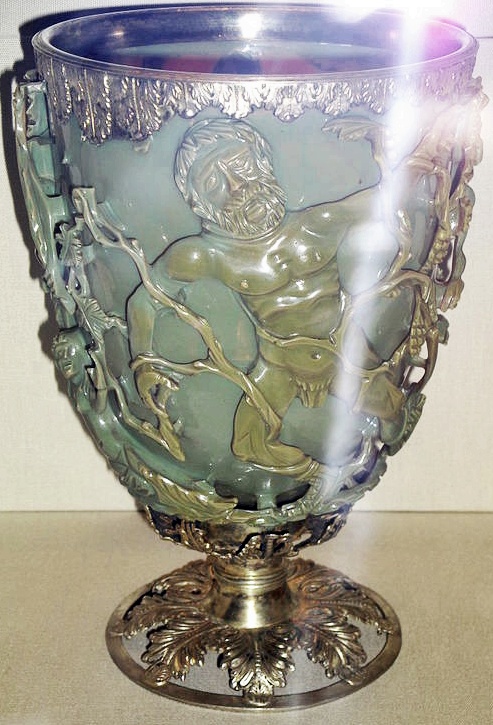
Photo: Johnbod · British Museum, London · 6 September 2010 (source capture); derivative uploaded 20 September 2010. Source · CC BY-SA 3.0. Source is an existing cropped derivative by its uploader; no further edits; displayed proportionally.
