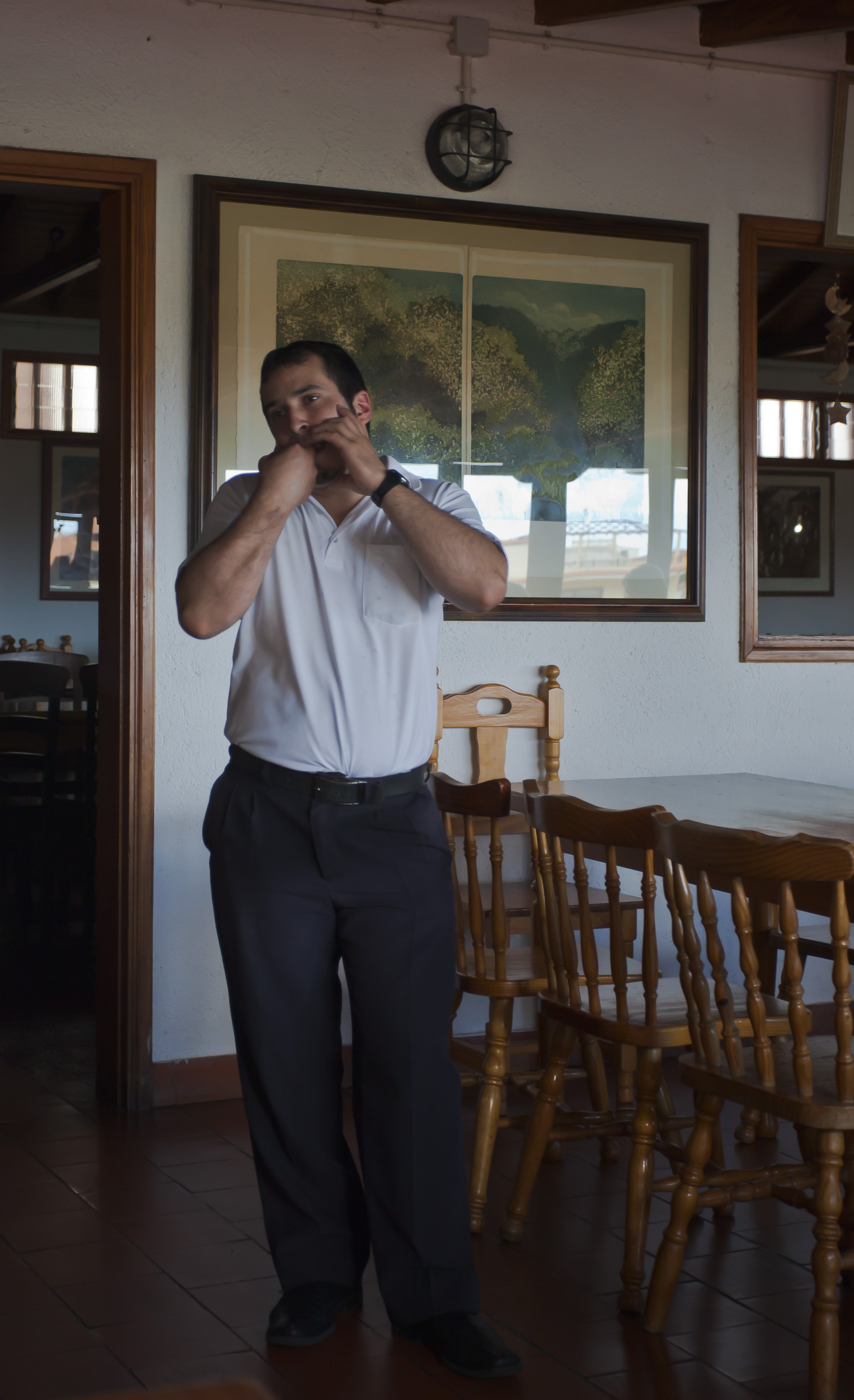
A person raises a hand to the mouth and whistles. To a visitor, the sound might seem like a signal to look over, come closer or stop. On La Gomera in Spain’s Canary Islands, it can be much more specific. Silbo Gomero is a whistled form of communication that reproduces spoken Spanish. 1
That is the surprise behind the photograph. The man shown is demonstrating the practice, rather than merely whistling a tune. Diego Delso photographed the demonstration on La Gomera in December 2012. The source does not identify the demonstrator or tell us the particular message being conveyed. 3

A familiar language in an unfamiliar form
UNESCO’s heritage description explains that Silbo Gomero represents speech through whistles distinguished by features such as pitch and interruptions. With sufficient practice, people can communicate messages rather than relying on a small fixed set of calls. It is a way of transmitting language through another acoustic form. 1
For someone unfamiliar with it, that distinction is easy to miss. A whistle can sound simple because it has fewer of the obvious textures of an ordinary speaking voice. Simpler sound does not automatically mean a simpler message. The listener’s knowledge supplies an essential part of the communication.
A useful comparison is the difference between hearing an unfamiliar language as a stream of noise and understanding its words. Silbo asks the listener to recognize patterns that an untrained ear does not yet know how to separate. The information does not become meaningless simply because an outsider cannot follow it.
A practice connected to an island landscape
Accounts of Silbo connect its use to communication across La Gomera’s rugged terrain. Deep ravines and separated settlements gave carrying a message by sound a practical role. Its cultural significance comes from the people who developed, used and transmitted that skill, as well as from the striking sound itself. 2
The photograph shows an indoor demonstration, not someone calling across a valley. That setting is useful in its own right: a practice can be explained and passed on in places other than the landscape associated with its earlier use. It would be misleading to invent a distant listener outside the frame.
Learning matters as much as making the sound
UNESCO records school teaching from 1999 and the practice’s inscription on the Representative List of the Intangible Cultural Heritage of Humanity in 2009. Its description emphasizes transmission between experienced practitioners and learners. Those dates refer to documented heritage history, not a new discovery today. 1
The Spanish Ministry of Culture’s published nomination documentation also treats education and safeguarding as central to keeping the practice alive. Recognition alone cannot do the work of learning: a language-related skill continues through people who are able to use and understand it. 2
That makes the demonstrator’s pose more interesting than it first appears. The raised hands are visible; the trained hearing and accumulated practice are not. A photograph can make you curious, but it cannot give you the experience of recognizing a message in the sound.
The next time a whistle seems to mean only “over here,” this island offers another possibility. For a trained speaker and listener, the sound can carry something much closer to a conversation.