A wood frog can spend part of winter with ice inside its body, no heartbeat and no breathing. When it thaws, it can become active again.
The secret is not simply enduring the cold. Ice forms outside the cells, while a rush of glucose helps protect what is inside them. The animal remains alive through the frozen period, as the National Park Service explains.
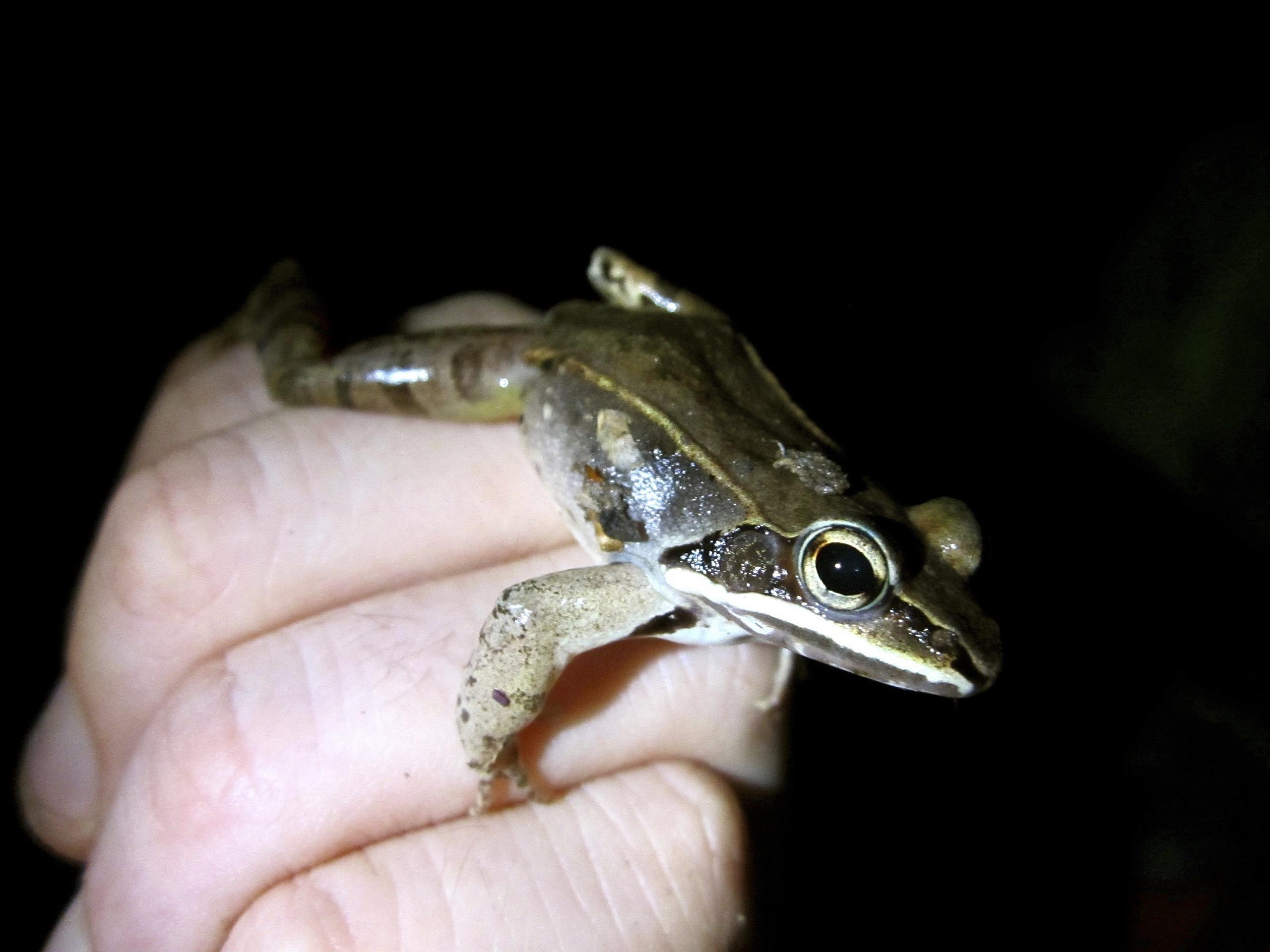
The cover photograph shows a living, unfrozen wood frog in Lothian, USA. Its ordinary appearance gives little hint of the winter strategy carried by this small forest animal.
Frozen outside the cells, protected inside
The National Park Service’s explanation describes ice accumulating outside cells and around organs. Meanwhile, the liver releases large quantities of glucose. That sugar helps protect the cells from the damage that freezing and water loss would otherwise cause.
The frog remains alive through this winter state.
Wood frogs spend this period on land, tucked into the forest floor. Their return to movement happens as they thaw. The ability sounds like a trick, but it depends on a very specific combination of physiology and winter shelter.
A snowy blanket makes a difference
Freeze tolerance has limits. A University of Alaska Fairbanks account published in 1996 describes researchers following frogs into winter hiding places and measuring the temperatures there.
Moss, leaves and snow helped keep those small spaces warmer than the air above them. One frog sheltered in loose sand; another settled into moss. The account also describes five frogs surviving an unexpectedly cold spell before becoming active when thawed.
Those observations make the story more interesting than a claim that the animal can withstand any cold. The frog’s body and its surroundings work together. A thermometer reading from the air does not automatically tell you the temperature of a frog hidden beneath insulating material.
The research account concerns particular Alaska frogs and conditions. It is a window into the investigation, rather than a universal temperature limit for every wood frog.
Spring brings another change of scene
The winter survivor then has a busy season ahead. The Park Service’s account of wood-frog breeding describes frogs gathering at temporary pools and other standing water after snowmelt. Males produce low, chuckling calls.
Temporary pools offer a trade-off: they can keep fish predators away, yet they can also dry before tadpoles finish developing. Young frogs that complete the transformation leave the water and head into the woods.
That journey gives the winter story a fuller shape. This is an animal moving between two very different kinds of survival problem: endure freezing on land, then use a short-lived pool to produce the next generation.
What the photograph can actually show
The Smithsonian image record identifies the cover animal as a wood frog, photographed in Lothian, USA, on March 28, 2014. It shows the living species, not a frozen specimen or an Alaska research subject.
The curiosity lies beneath that ordinary appearance. A small frog in a person’s hand carries a winter strategy that makes a forest floor worth looking at very differently. Leave wild frogs and their shelters undisturbed; household freezing would not reproduce this natural process.